
Ivy is more than just "Any of a genus of climbing or trailing plants having lobed or evergreen leaves." This usually means the ubiquitous English Ivy (Hedera helix) which is grown indoors as an ironclad house plant or outdoors mainly as a groundcover. English Ivy is a native to Europe, North Africa and Western Asia. Besides English Ivy, there are actually two other hardy species of vines known as ivies that are common in Greater Kansas City.
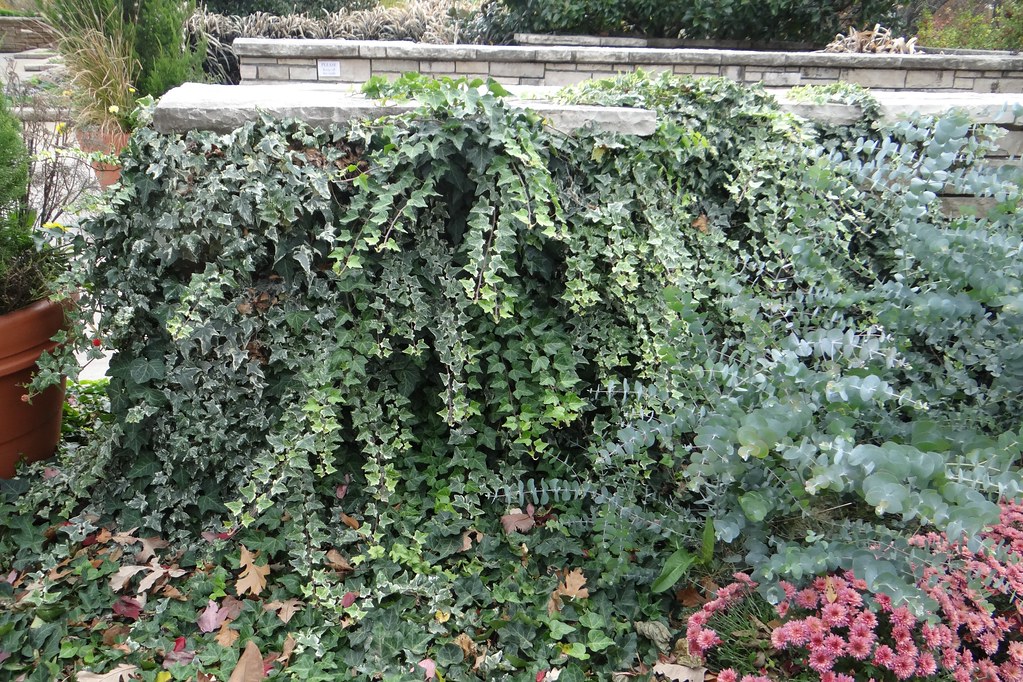
Here is a picture of Powell Gardens' Visitor Center terrace walls cloaked in English Ivy cultivars. These plants survived from a past seasonal display and look nice as a backdrop to the bed outside Perennial Gifts. They are the cute juvenile form of English Ivy often used as house plants too. Recent mild winters have allowed them to thrive, including a more tender variegated variety. We have had to reduce their size by two-thirds this season.
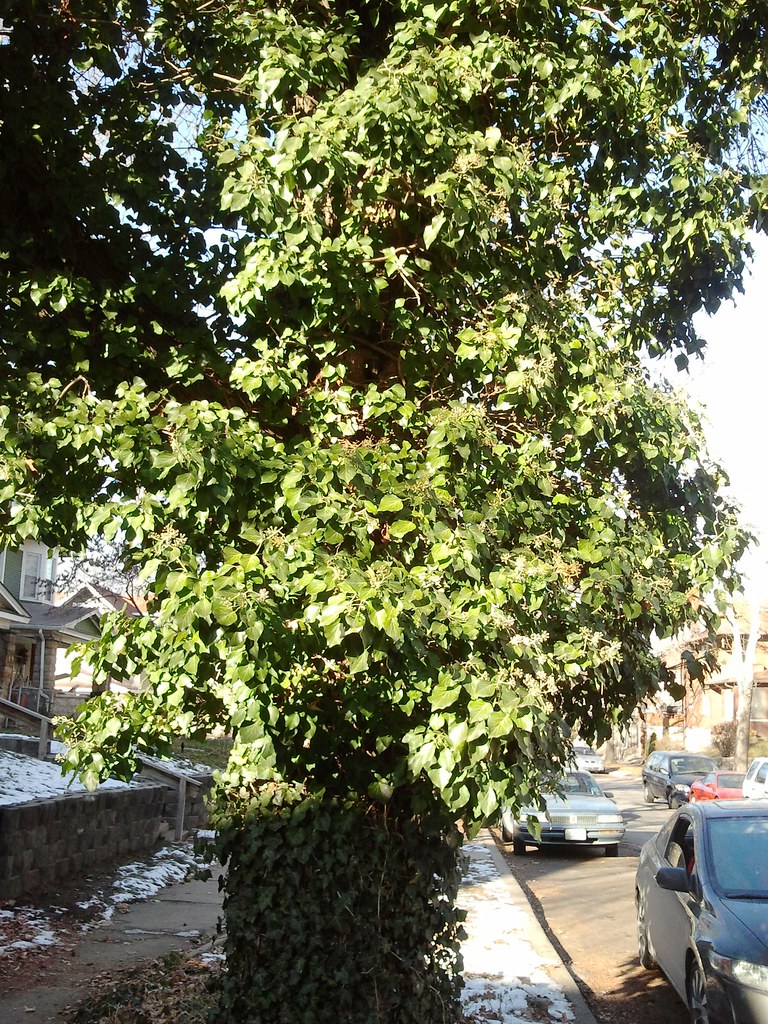
This is another image of English Ivy! Here it is engulfing a street tree in Kansas City. It has morphed into the adult form of English Ivy with larger leaves and actually blooms.
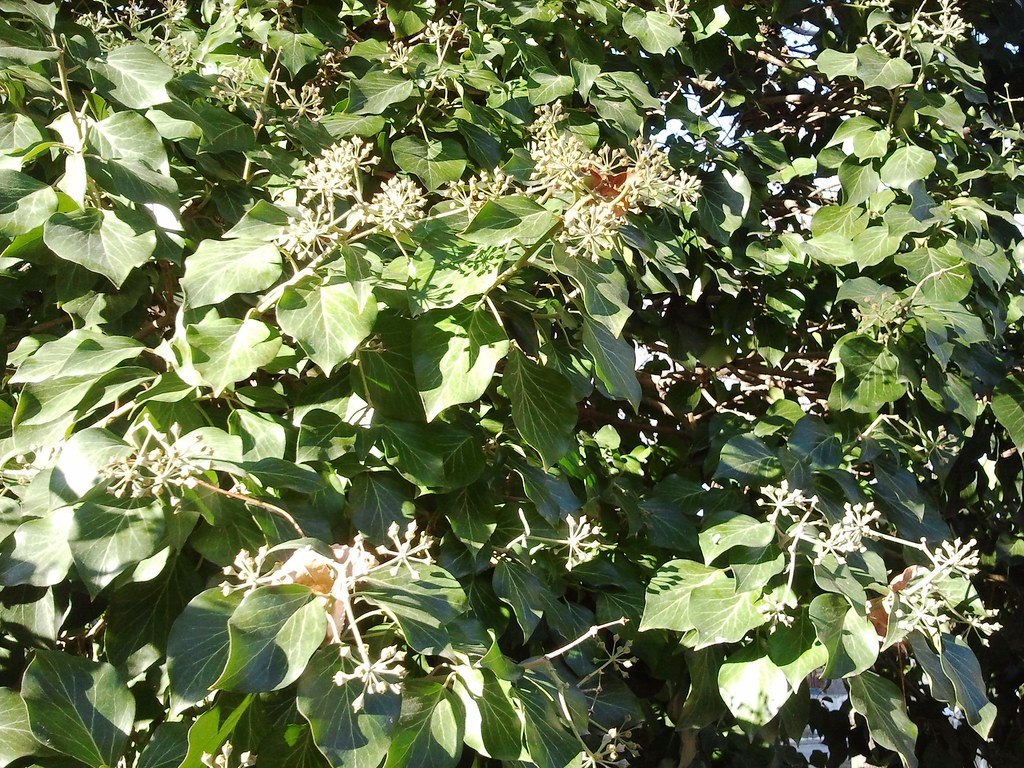
Here is a closeup of the adult English Ivy showing the clusters (umbels) of fall's spent flowers which will develop into quarter inch black fruits in spring. Well, we hope not! The flowers bloom late in fall and are nectar rich for the last of the season's butterflies and bees. Usually an arctic cold snap freezes them off in our climate. Recently they have been successfully flowering and with MILD winters they are even setting fruit. The fruits ripen in spring and birds pass them far and wide and if this continues, English Ivy may need to be added to the invasive species list for our region.
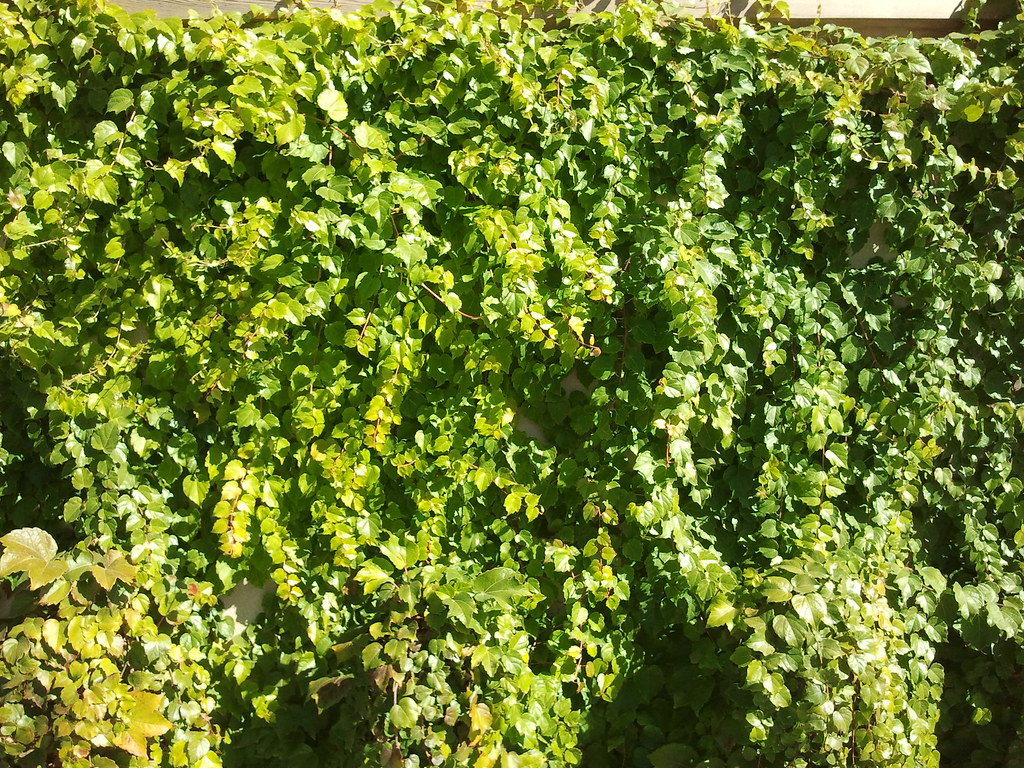
Here's another "Ivy" commonly planted in our region: it's the Boston Ivy (Parthenocissus tricuspidata). This picture was taken on a wall in Kansas City. Boston Ivy is not native to Boston but comes from Central China to Japan. It is the ivy of Harvard and Wrigley Field! It is a close relative to our beautiful native Virginia Creeper (P. quinquefolia). Go to England -- say Oxford and you will find our native Virginia Creeper! Why do we always want the exotic?
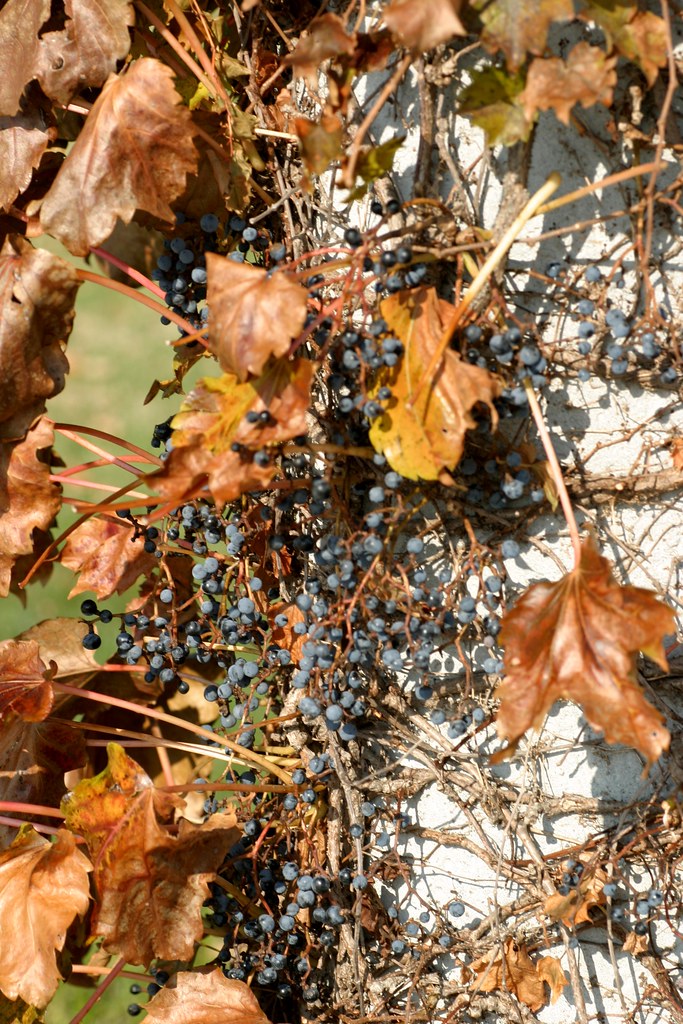
Boston Ivy produces abundant blue berries in the fall just like our native Virginia Creeper (photo from Kansas City). Birds like these just the same as our native Virginia Creeper's fruit. I was never alarmed by this until our Horticulturist Matt Bunch alerted me of all the seedlings he had to remove while he was managing the Discovery Center landscape. Matt also pulls many seedlings from his urban home landscape.
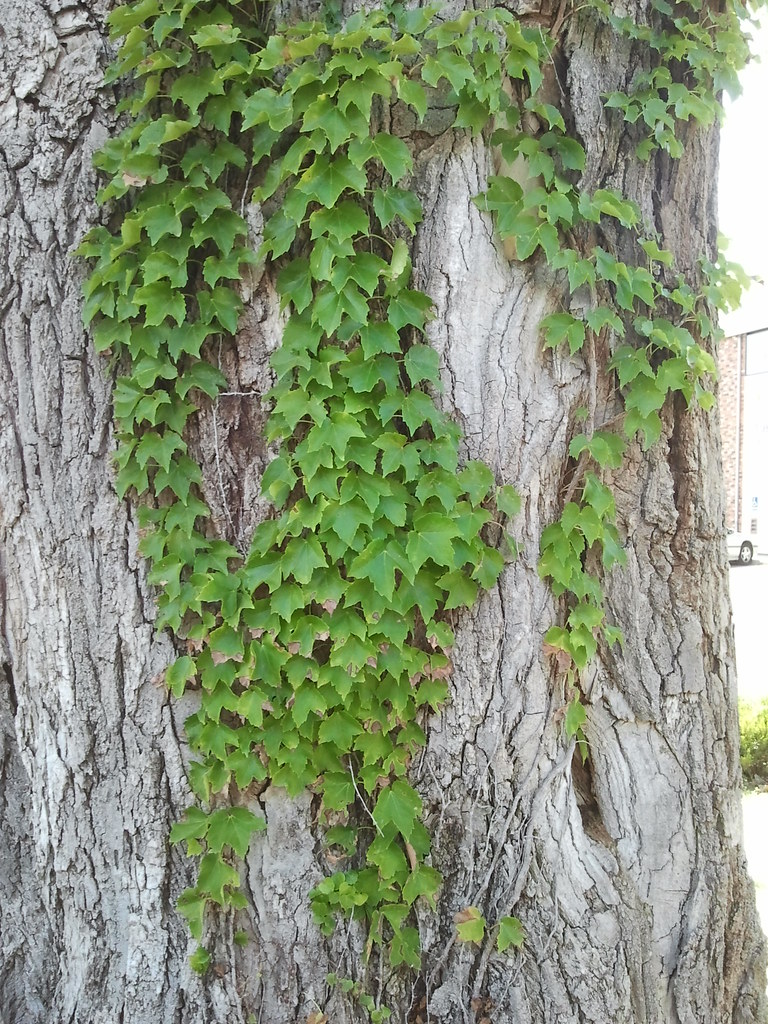
Here's a picture of Boston Ivy growing wild on a native Cottonwood tree. For this reason Powell Gardens made the decision several years ago to remove its few Boston Ivy plants as we have seen they have proven invasive plant potential in our region. Grow Native! Choose Virginia Creeper instead which has far more colorful autumn color and is host to a wealth of great insects including several spectacular sphinx moths.
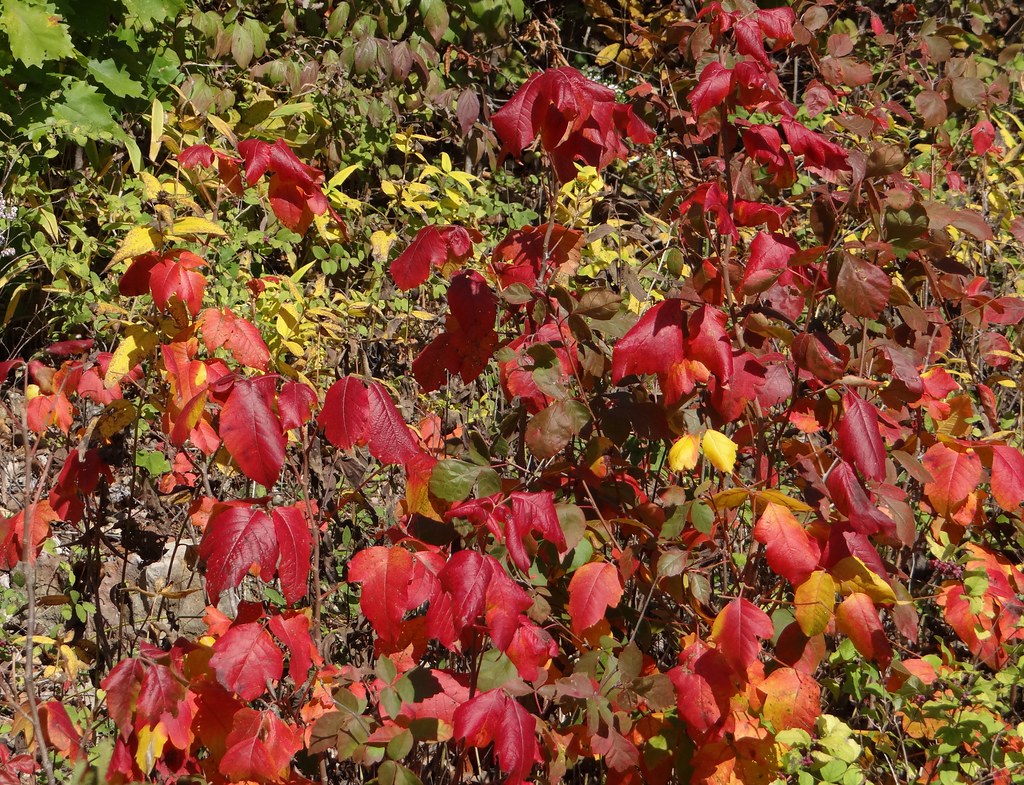
This plant with gorgeous fall color is the final and only native "ivy" of our region: Poison-IVY (Toxicodendron radicans). This plant may make readers shudder. I used to be quite immune to its toxic oil urushiol that causes contact dermatitis but sometimes I think I can get it just by looking at it (which is not true -- it must come in contact with your skin). I know Poison-Ivy is a native plant with beautiful fall color. We remove this plant from Powell Gardens wherever it could pose a hazard to Visitors. We let it be in the wilds of the site because it really is beautiful in the fall and....
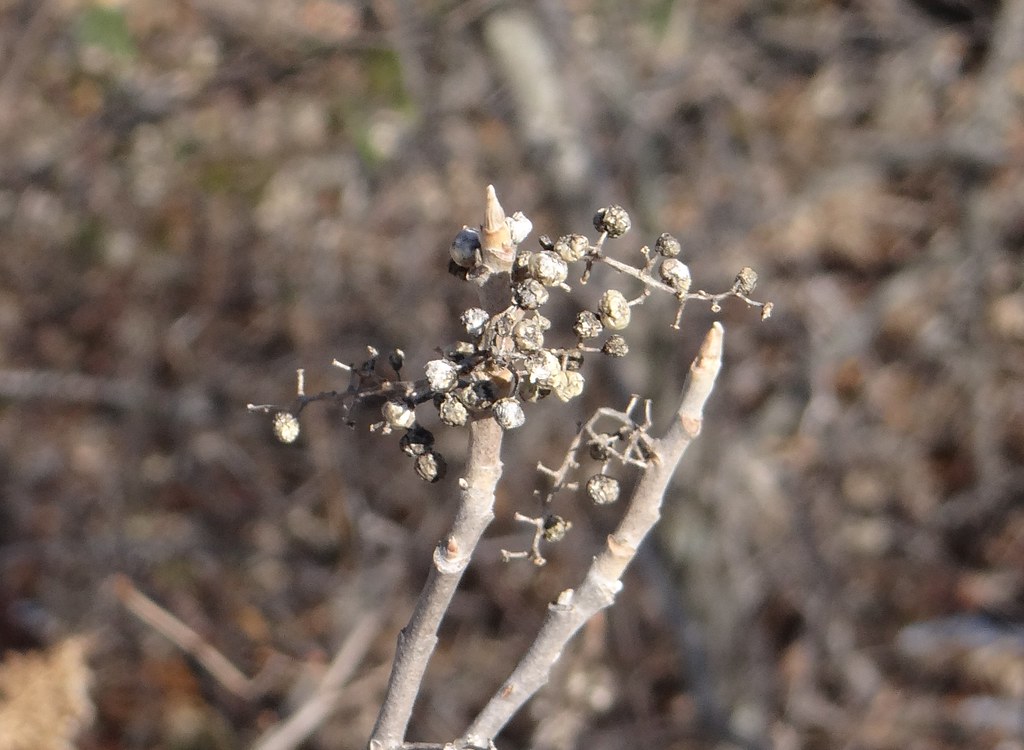
The best thing about Poison-ivy are these whitish berries (photo taken today). The fruit are one of the best things about this plant because they are a favorite winter food for many, many species of birds from our state bird the Eastern Bluebird to Yellow-rumped Warblers and Ruby-crowned Kinglets. I have seen everything from huge Pileated Woodpeckers to Dark-eyed Juncos feeding on them. Yes, all those birds spread poison-ivy far and wide but it is part of our natural ecosystem with a plethora of wild creatures from moths to birds and deer feasting on its bounty. As a bird lover, I keep the vine in my woods but do pull all the bird planted seedlings in my garden beds. I simply use a plastic bag over my hand and dump them in the compost.
So that's our league of ivy and a good reason to learn botanical names rather than common names. All three plants bare the same common name but are completely unrelated. Poison-Ivy is in the Cashew Family (Anacardiaceae) related to cashews, sumac, smoketrees and mangoes. English Ivy is in the Aralia Family (Araliaceae) related to Sarsaparilla, Ginseng and Devil's Walking Stick. Boston Ivy in the Grape Family (Vitaceae). with Virginia Creeper and the world's grapes as relatives.
Friday, January 4, 2013
Our League of Ivies


Thursday, December 13, 2012
Hollywood at Powell Gardens
Deck the Halls with Boughs of Holly may be a popular song of the holidays but Powell Gardens is sure decked out in dazzling hollies right now. From the entrance at the Gatehouse to the Visitor Center landscape, Dogwood Walk, Island Garden, Rock & Waterfall Garden and Perennial Garden there are berry-filled hollies ablaze with color now. We tend to think of hollies as evergreen but there are both deciduous and evergreen varieties to celebrate the season with.
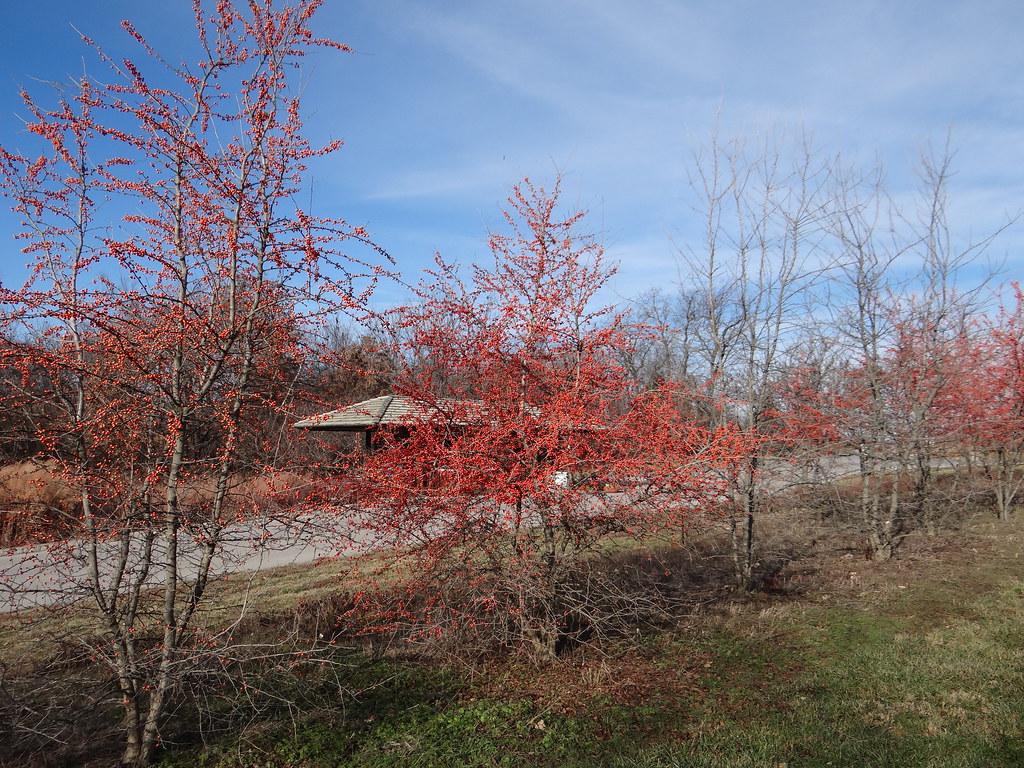
Here is the line of seedling Possumhaws or Deciduous Holly (Ilex decidua) along the entrance road by the gatehouse (you can see the road and gatehouse in the background). We grew these from wild collected seed and the girl plants are filled with fruit from orange-red to red. The bare trees are male but needed for pollination. Possumhaw hollies have tiny flowers in mid spring rich in nectar and make a fine honey.
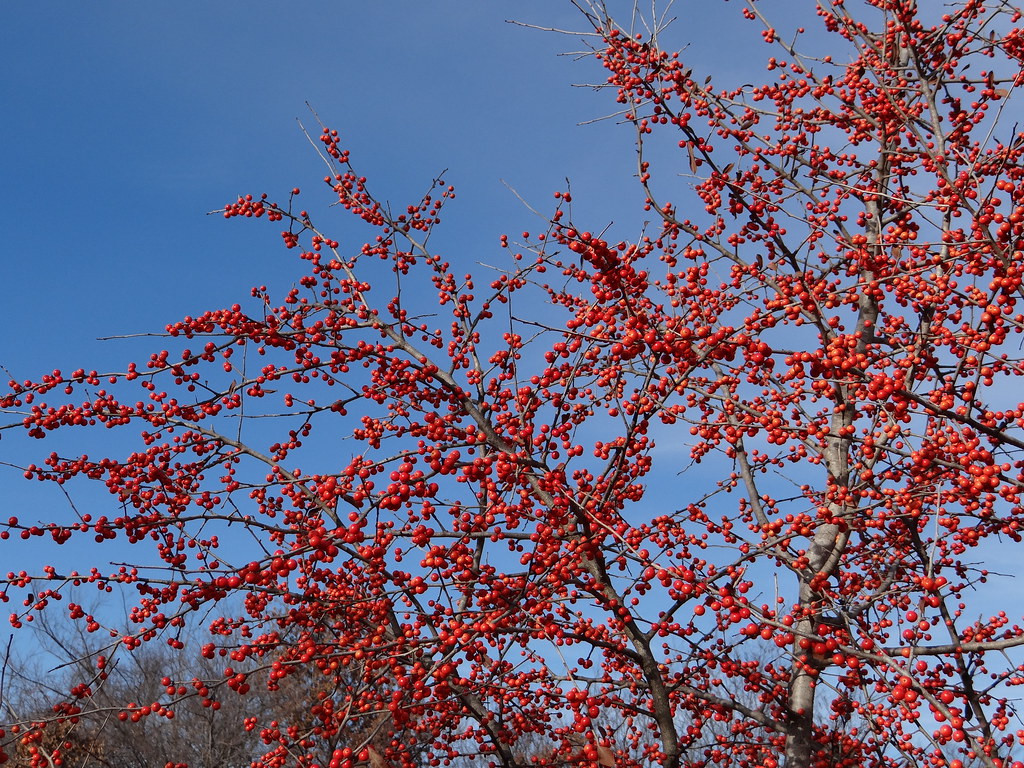
I cannot get enough of the dazzling berries on leafless Possumhaws at this season. They last and last, far longer than color on a blooming tree. The birds are starting to feed on these fruit and will be sustained by this larder well into and sometimes through winter. The berries stay bright red until severe cold (below zero F) can discolor them. Possumhaws are also one of the few small trees that weathered last summer just fine without extra water! A mature possumhaw is 20 feet tall and wider than tall.
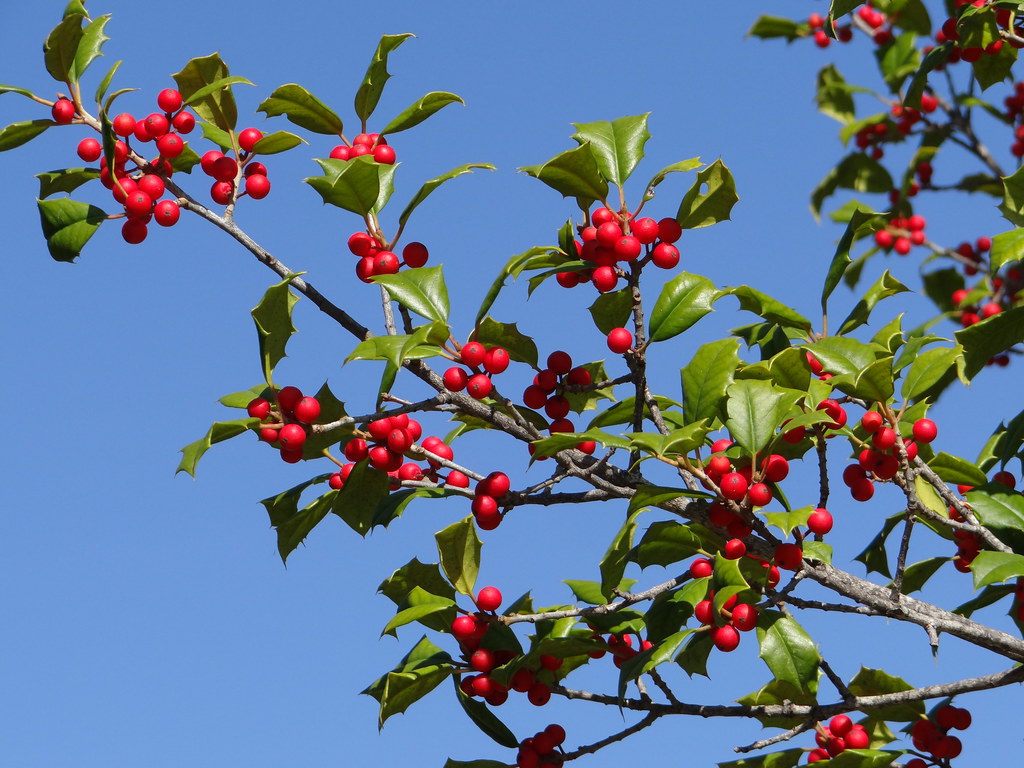
Here is an image of our American Holly (Ilex opaca) on the terraces out the north side of the Visitor Center. THIS is the plant people think of as holly in America. American Holly is native to the southeastern corner of Missouri along Crowley's Ridge and I have seen the wild trees there. True American Hollies are otherwise confined to older neighborhoods around Kansas City where some spectacular trees occur as tall as 50 feet! This species is no longer found in area nurseries so rarely seen in new landscapes as it also is NOT a tree for instant gratification. It can suffer in disturbed or low pH soils and grows slowly but has iron strong wood.
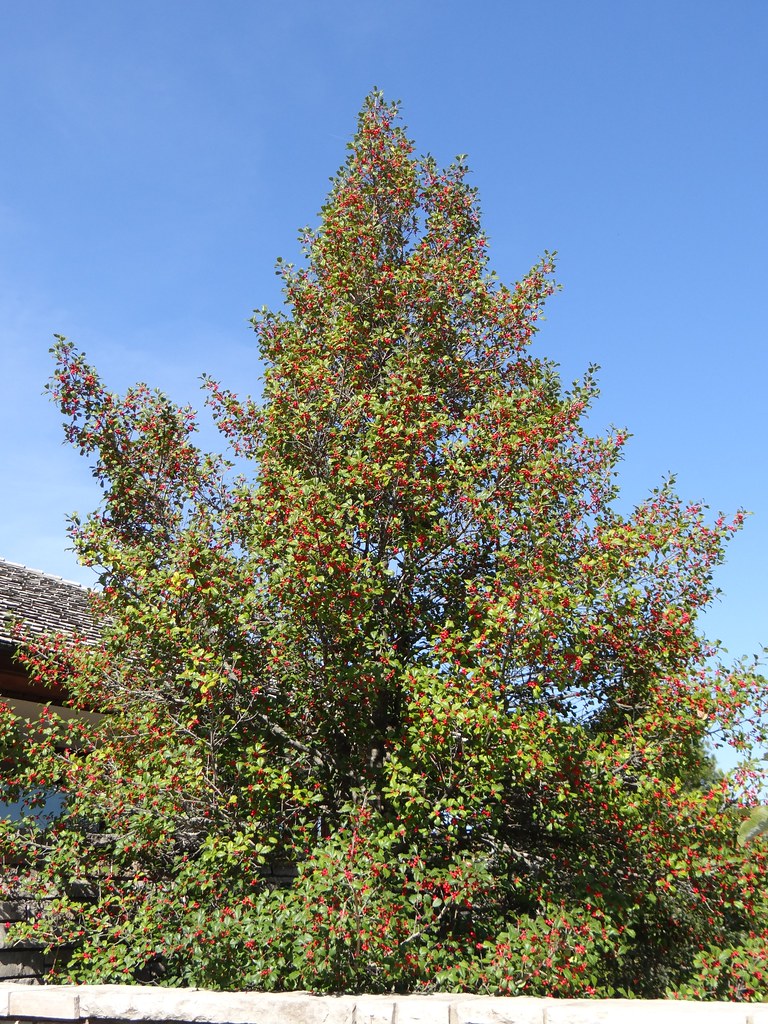
This is a full view of the American Holly tree on the north terraces of the Visitor Center. American Hollies grow into a strongly pyramidal evergreen tree. This one was simply loaded with red holly berries though the robins have dented the fruit set now. It is in a raised bed with good drainage. The foliage of American holly is highly deer resistant, but has sharp spines making gardening beneath them without gloves a painful ordeal.
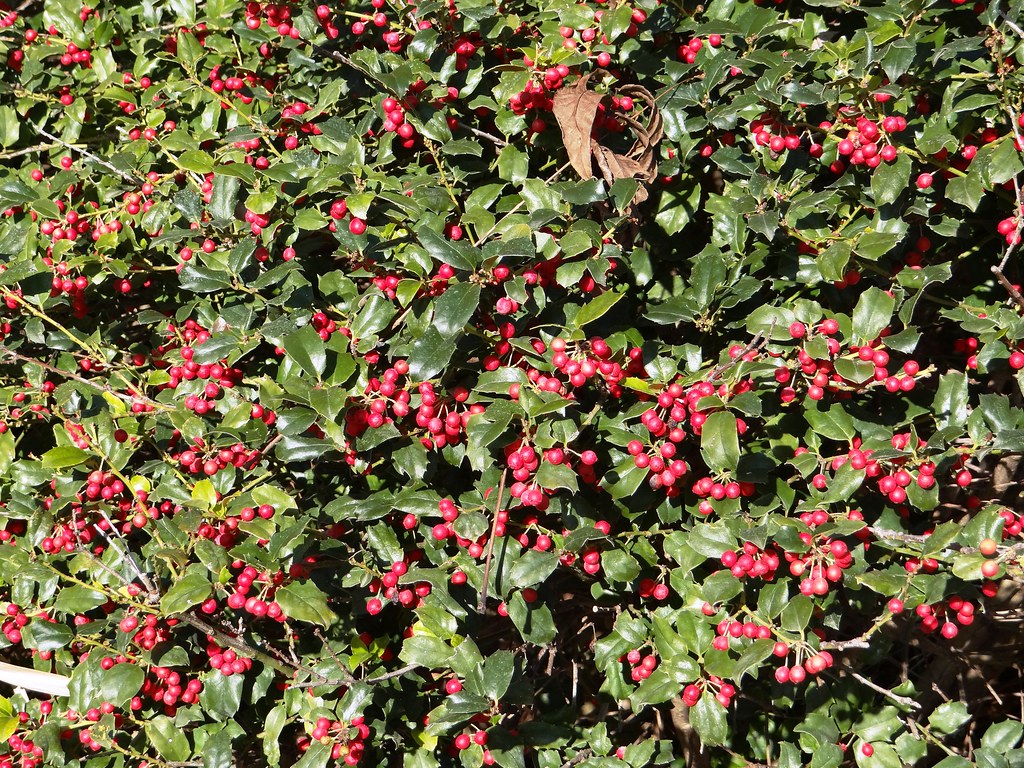
Around the Visitor Center we also have some evergreen hollies that are shrubs. This is the 'China Girl' Holly which is a hybrid between the heat-loving Chinese Holly (Ilex cornuta) and a very hardy northern Japanese Holly (Ilex rugosa). We have it on the "hot" south side of the terraces as it is very heat tolerant from its Chinese parent. The China Hollies ('China Boy' is the pollinator) have decidedly yellow-green leaves but they are very heat and drought tolerant.
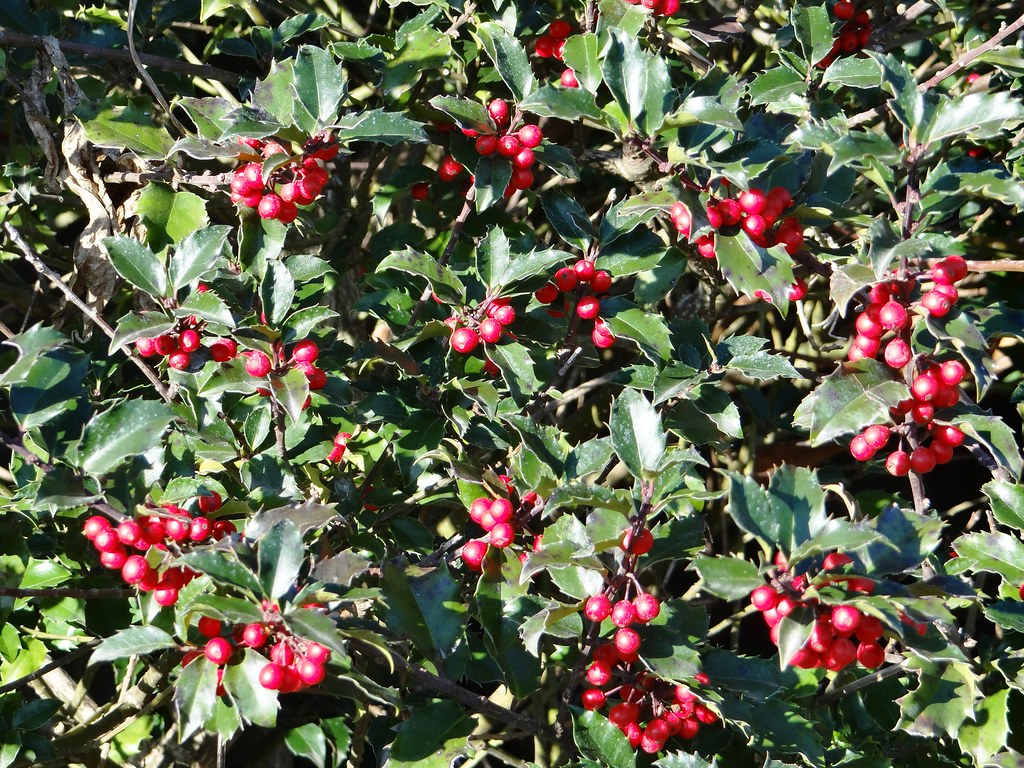
Off the shaded, north terraces of the Visitor Center we grow some of the "Blue" or Meserve Hollies (Ilex x meservae) which have rich dark foliage with almost a bluish overtone. This is 'Blue Maid' Holly but we also have 'Blue Princess' and 'Blue Stallion' as pollinator. They have gorgeous foliage but they are hybrids between the unhardy English Holly and the hardy, northern Japanese holly (Ilex rugosa). They are much more sensitive to heat and drought in our local gardens but they do have beautiful foliage! Unfortunately, all these shrub hollies are a favorite winter fodder for deer and are stripped leafless unless protected by sprays or netting.
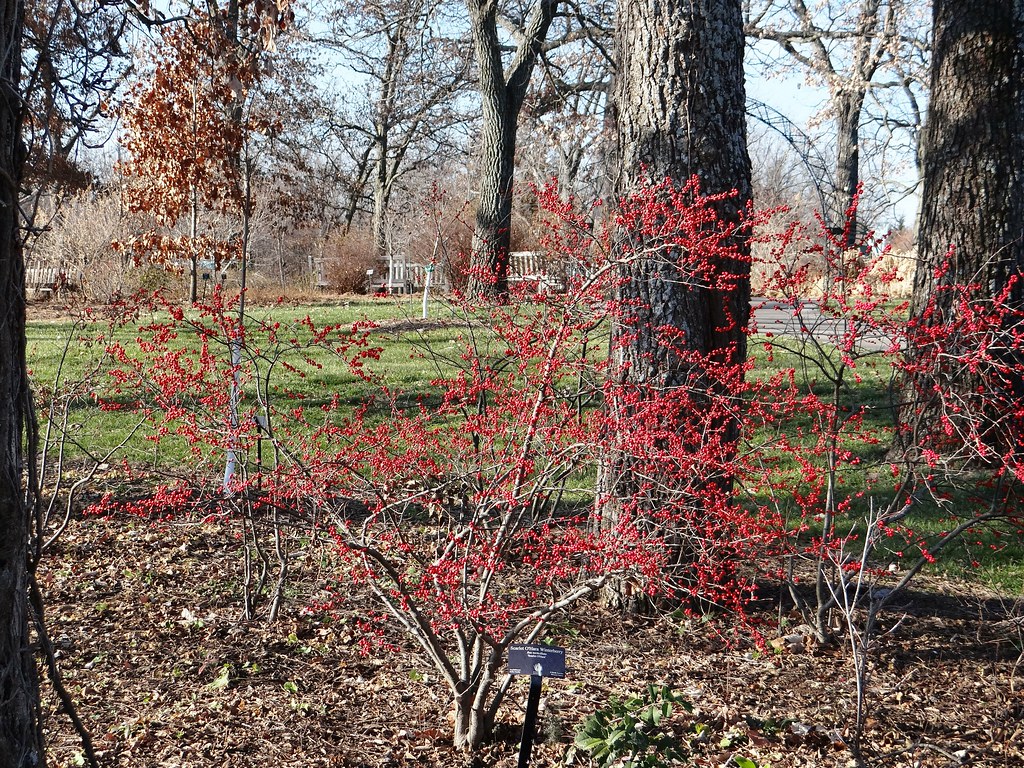
Along the Dogwood Walk from the Visitor Center to the Island Garden you will see Winterberry Hollies (Ilex verticillata) which is a shrub also native to Missouri. It is found in east central Missouri but has a range that stretches from Minnesota to Texas and eastward to the Atlantic coast. Many selections have been made for beautiful berry production and 'Scarlet O'Hara' is the one in the center of the picture above with 'Winter Red' on either side of it. They all have the beautiful red berries but must have a pollinator -- in this case 'Southern Gentleman.' These shrubs do become quite large over time and really count on at least 6 feet but I have seen them even bigger! You can train them into little trees (like our Horticulturist Duane Hoover has done at the entrance to the Kauffman Memorial Garden) but they will never get as big as a possumhaw.
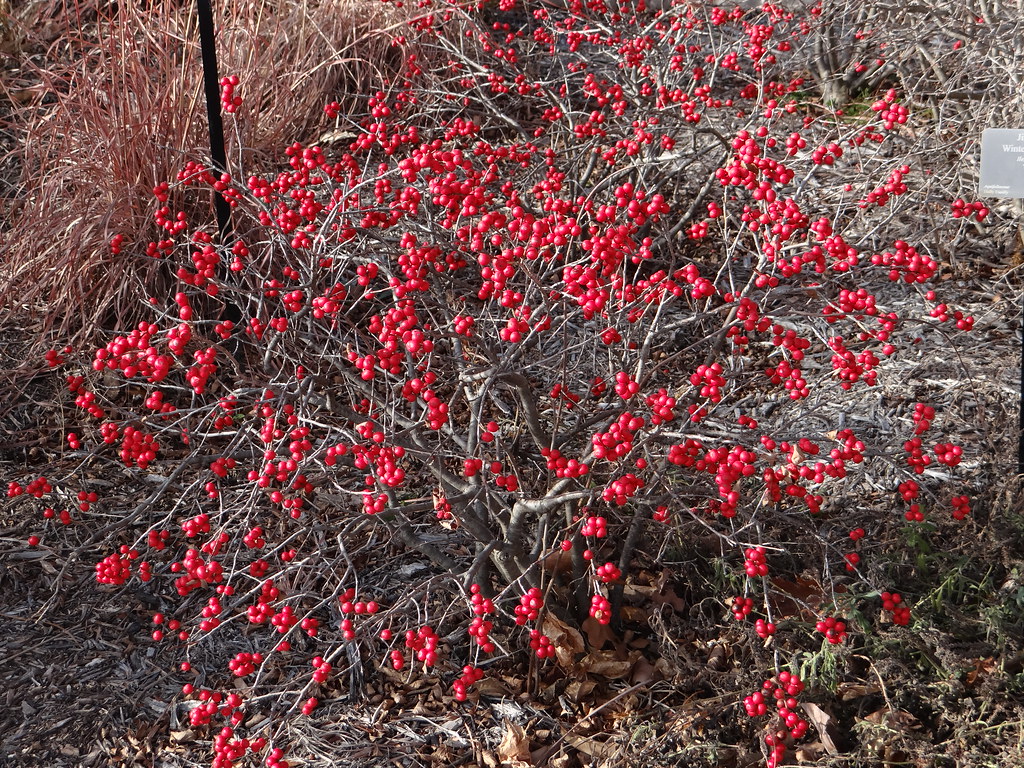
For a more compact Winterberry Holly, try this one: 'Red Sprite' which usually stays lower than 4 feet like our plants shown here in front of the Gatehouse. It needs 'Jim Dandy' as a pollinator. New in 2013 is a new compact Winterberry: Berry Poppins(TM) which stays very compact 3-4 feet. We will have that new cultivar at the spring plant sale.

'Winter Gold' Winterberry has salmon-orange berries that are just starting to discolor. I love the color of this one just after the leaves drop when it is much more salmon-gold. Our plant is on the back side of the Rock & Waterfall. This cultivar was discovered as a sport branch of 'Winter Red' and was propagated from that. More than half of our plant has reverted back to 'Winter Red'! It was a cool plant just a week ago with red and orange berries but the birds have devoured all the red berries and left that part bare. I do not know why birds prefer the red-berried hollies to the yellow and orange-fruited varieties.
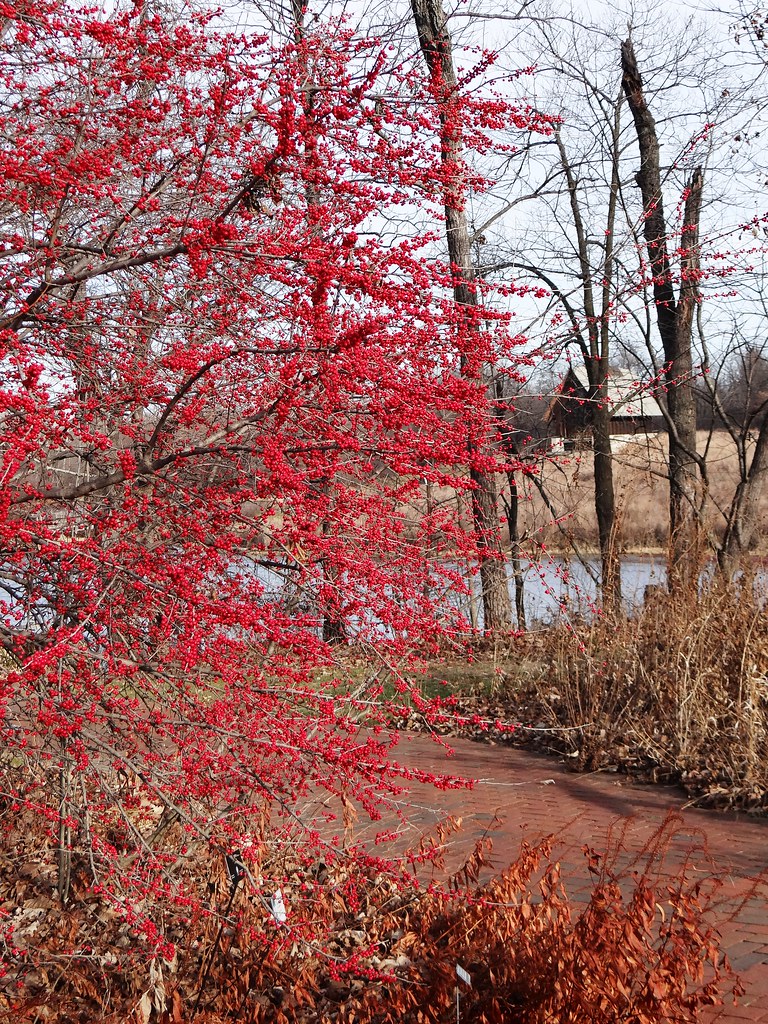
Here's the Possumhaw Holly in the Perennial Garden today with a view of the Chapel beyond. The clouds made for a gray sky and the garden is dormant but the holly is dazzling! Why oh why are these trees not more popular? It IS because gardeners tend to shop in the spring and these hollies have tiny flowers with no impulse purchase appeal. They are beautiful in fall when few people are buying plants though that is a better time of year to be planting! This particular tree was donated to us by the late local plantsman Andy Klapis. We went and dug it from his backyard in Raytown. I can still hear his wonderful laugh every time I see this plant.

Here's a closeup of the Andy Klapis Possumhaw in the previous image. It is just such a vibrant red! I cannot imagine a winter garden without these beautiful hollies. The hot red color is just such a feast for the eye in this season of browns and grays. The birds they attract add to the beauty and drama of the scene, entertaining one for months. Our most beautiful possumhaw is in our trial nursery areas and it has vivid red, LARGE berries that last a long time, unscathed by below zero temperatures.
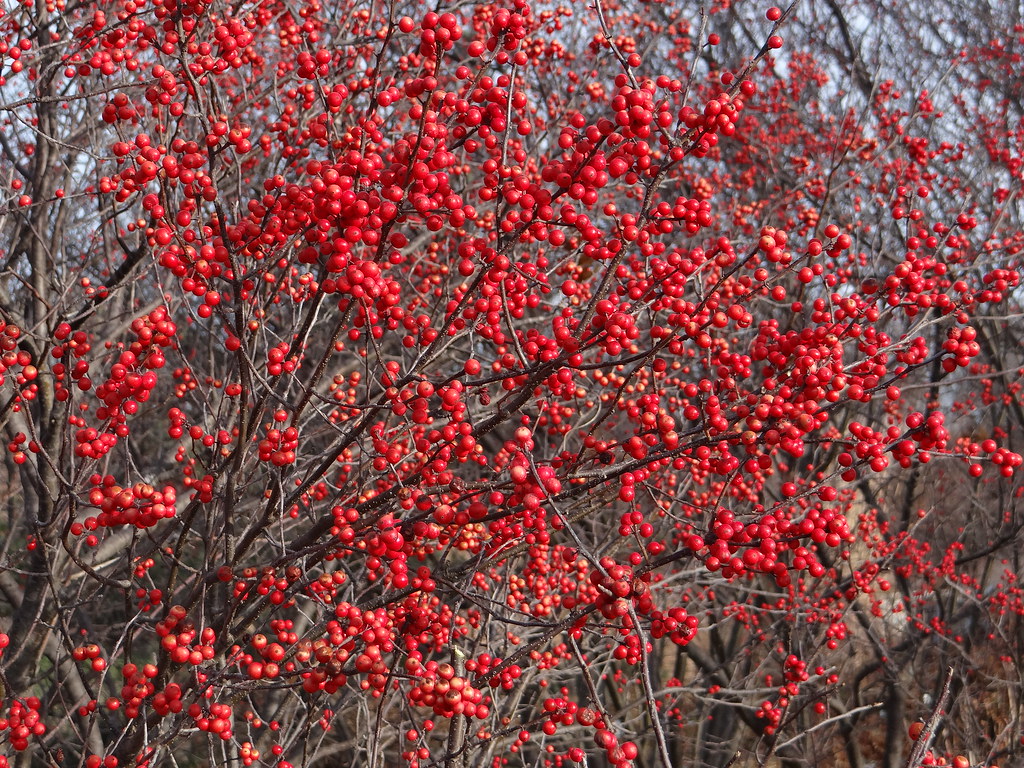
The last image is a closeup of the 'Sparkleberry' Winterberry in the Perennial Garden. This cultivar is actually a hybrid between native Winterberry and its Japanese counterpart (Ilex serrata). This group of shrubs has been so stunning in the Perennial Garden but the birds have really been feasting on it now so it is not as heavy fruited as it was earlier -- this image from today is on the back side of the mass of shrubs. Mockingbirds, robins, bluebirds, and waxwings are the main species of birds attracted to holly fruits. Annoying European Starlings hate holly berries -- another reason to plant them to attract our native birds! Enjoy these wonderful images and come out and see them for yourself while they last. The gardens sure are a good place to watch winter birds and we have a Feeder Watch area set up in the Visitor Center right now. Most of all, put hollies on your garden wish list to plant next year and you too can deck your garden with these beautiful plants so in spirit with the season.
Thursday, December 6, 2012
Ornamental Attributes of the Winter Landscape
The winter landscape is upon us. Just two more weeks until the winter solstice and the official beginning of winter but meteorological speaking, winter begins with December. The mild weather so far this season has made foliage and fruit hold well and many of our earliest blooming plants already start to flower!

I like this image of the entrance to the Island Garden now. The light levels are low but there is a rich amount of foliage, fruit and other interest to the scene. It has also been mild enough to want to sit on the bench and enjoy the scene. The small trees on either side of the bench are Tea Crabapples (Malus hupehensis) loaded with fruit, there are other shrubs with persistent foliage and many perennials and groundcovers with evergreen foliage to help add interest to the scene.
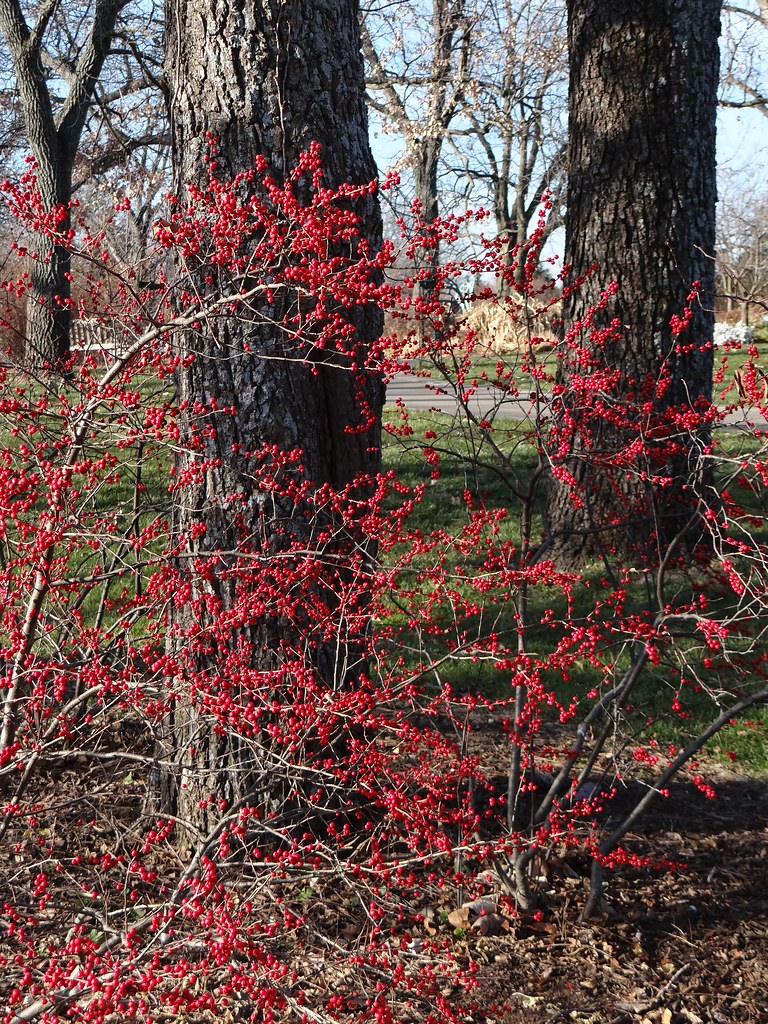
Bright berries add the most color to the gardens now. What could be more warm and invigorating than the brilliant berries of hollies now? These are some of the Winterberry Hollies (Ilex verticillata) along the Dogwood Walk.

These beautiful fruit at the opposite, cool end of the color scale are also lovely now: it's a Rusty Blackhaw (Viburnum rufidulum) on the north side of the Rock & Waterfall Garden.

I had to show a yellow-berry to contrast again how the warmer colors are much more vivid in this season. This is a 'Finch's Gold' Possumhaw Holly (Ilex decidua) between the Rock & Waterfall and Perennial Gardens. Yellow sure glows at this season.
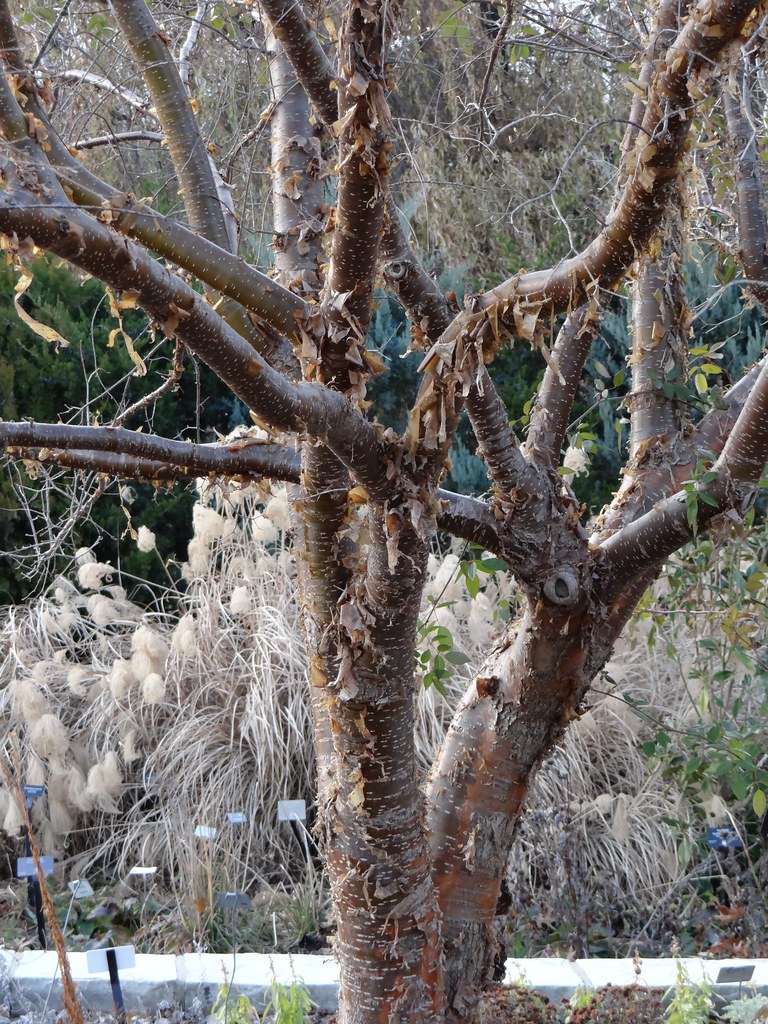
With the deciduous trees now bare, their bark becomes center stage in the winter landscape. I love the exfoliating and shaggy nature of the 'China Snow' Peking Lilac (Syringa pekinensis) in the Perennial Garden now. Behind the tree you can see the wonderful winter nature of a maiden grass (Miscanthus).
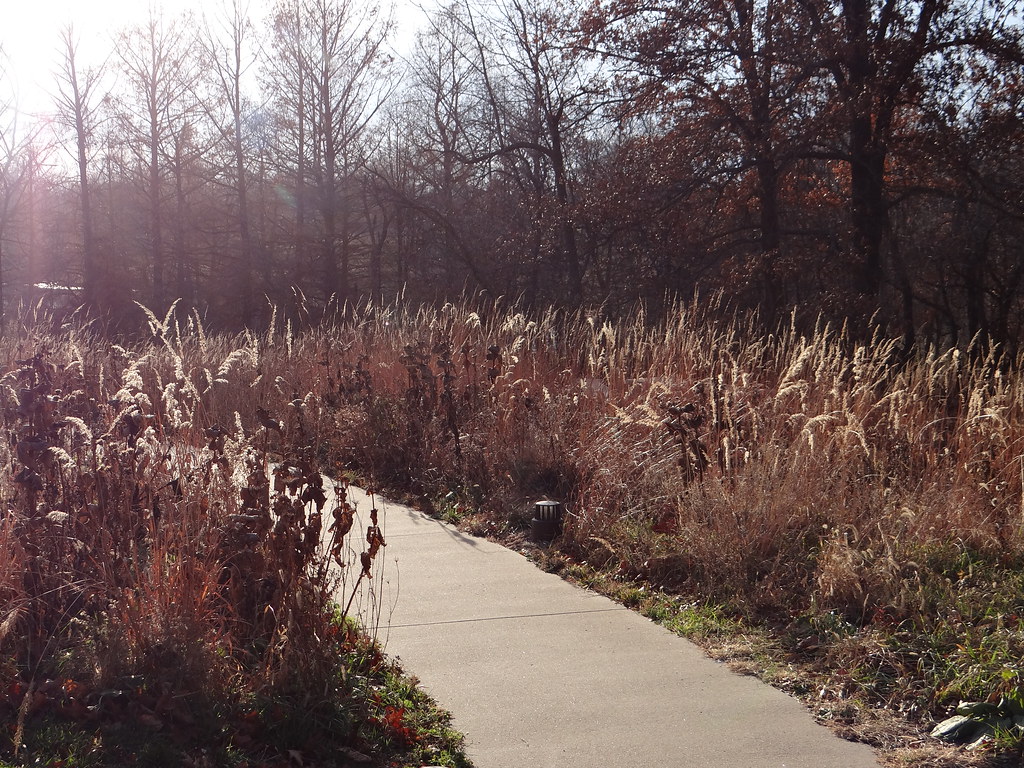
The gardens grasses literally shine right now but only when back lit. The sun illuminates the seed heads of many of our grasses: Indiangrass (Sorghastrum nutans) in this image along the walkway next to the Chapel.
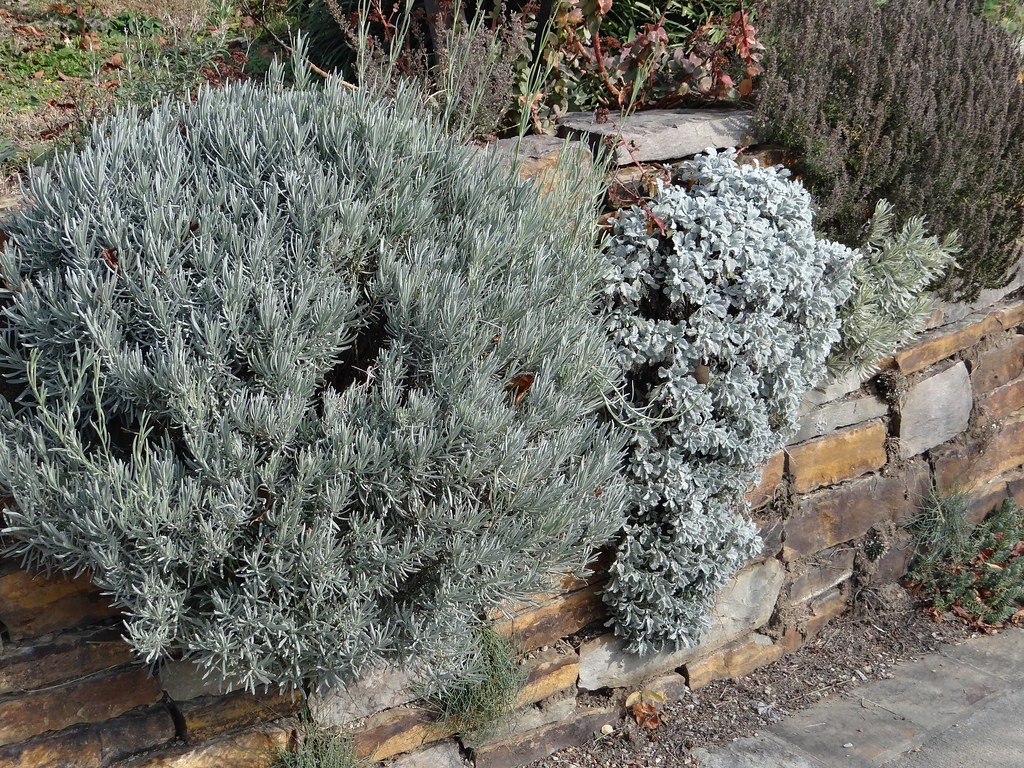
The Island Garden's living wall has some of the best foliage now. Here's Silver Frost Lavender, Partridge Feather and Winter Savory all decked out for this season.
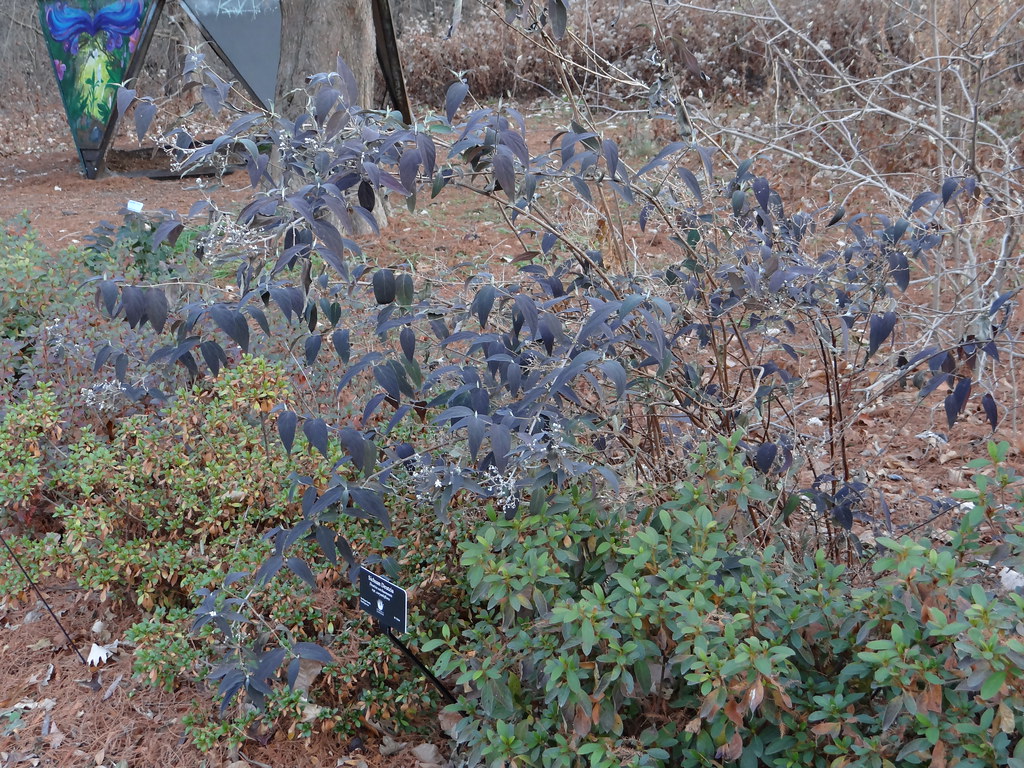
This has to be one of our more unique fall foliage -- it's the almost blue fall color of Sichuan Deutzia (Deutzia setchuenensis) with contrasting evergreen foliage of Encore(R) Azaleas. This scene is along the south path into the Rock and Waterfall Garden.
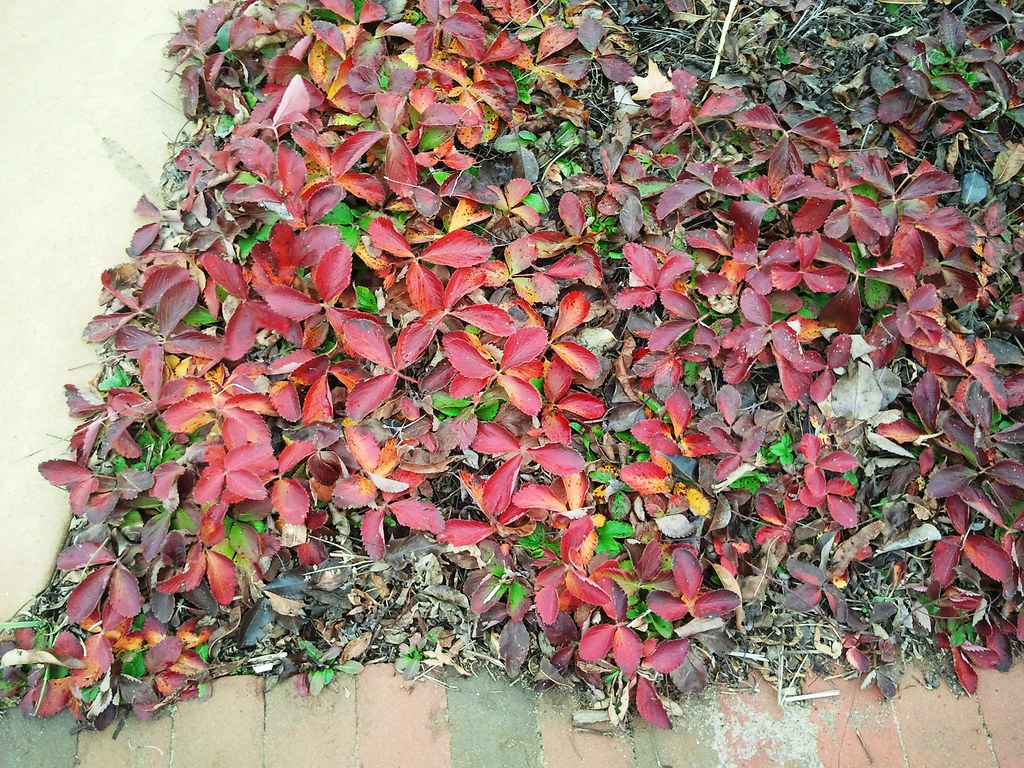
Again, warmer foliage colors now are much more dramatic like this mass of Wild Strawberries (Fragaria virginiana) in the Peach Court of the Heartland Harvest Garden. Wild Strawberries are a very underutilized groundcover and a companion plant to the peach trees. Their foliage is "evergreen" but you can clearly see it turns some rich shades for the winter season.
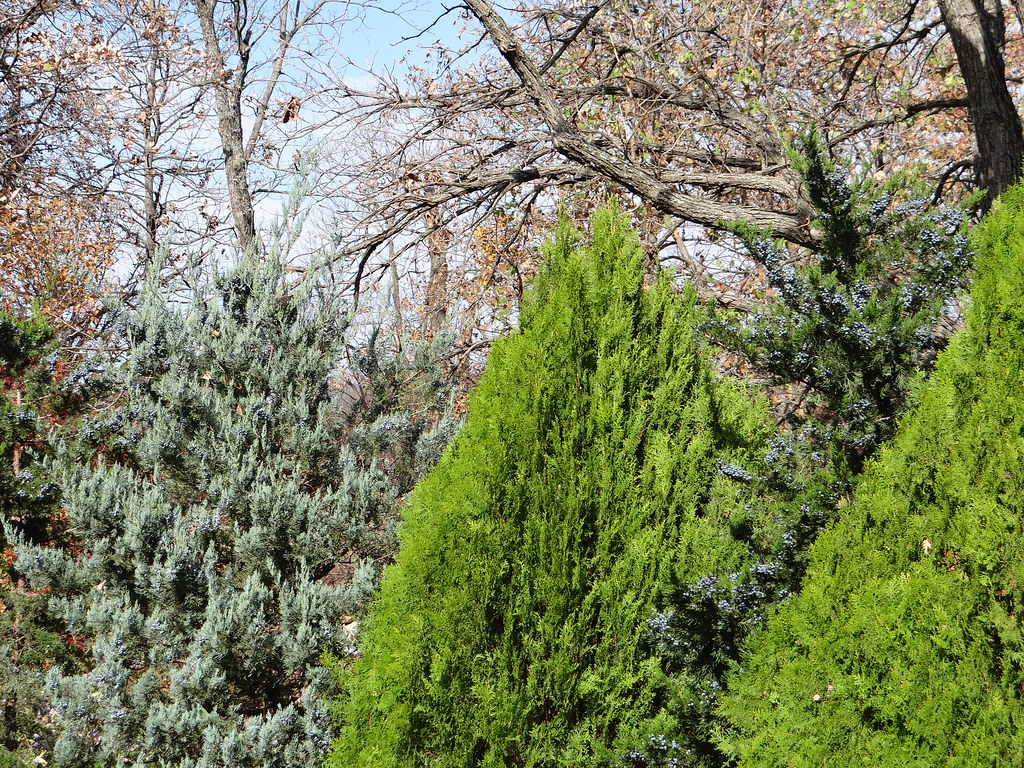
Evergreen conifers really are structural elements in the garden now but so often they are not utilized to their fullest potential of contrasting textures and shades of green from blue-green to gold-green! Here's the tapestry hedge in the Perennial Garden comprised of three evergreens: Glauca Juniper (Juniperus virginiana 'Glauca' - left), Berkman's Gold Oriental Arborvitae (Platycladus orientalis cultivar in bright green but soon will turn gilded in gold with COLD weather, and an 'Emerald Sentinel' Juniper (Juniperus virginiana cultivar) with darker green foliage and blue "berries."
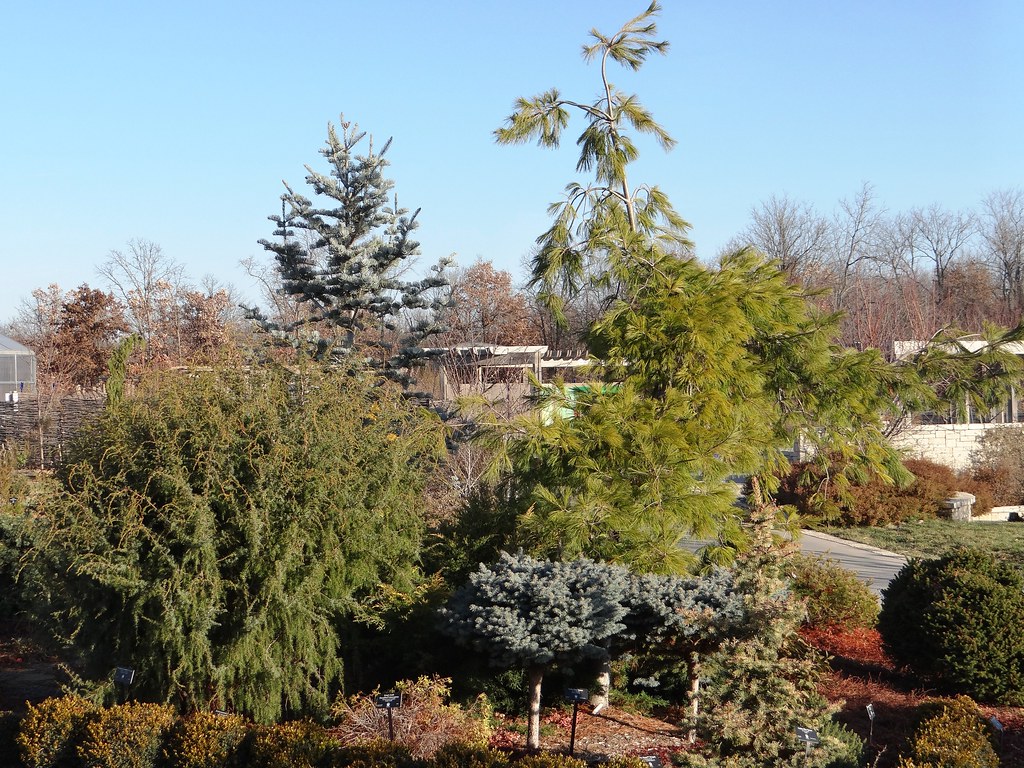
The Conifer Garden off the north end of the Visitor Center also depicts a wonderful array of evergreens in various hues, textures and forms. Why do people grow standard blah foundation plants and clip them into shapes when they could choose plants like this? Come check it out for ideas!
The gardens are in their winter garb but no less beautiful. Consider a visit to get ideas for your own winter landscape or just enjoy the subtle beauty of the gardens in this tranquil time of year.


