
Fall has officially arrived and now we go into the half of the year where the nights are longer than the days. The cool weather has been so welcome after the long HOT summer. We could use more rain but it certainly isn't as dry as summer. Many of the Heartland Harvest Garden plants weathered the summer well and are ripe with fruit or have a second wind with repeated bloom.
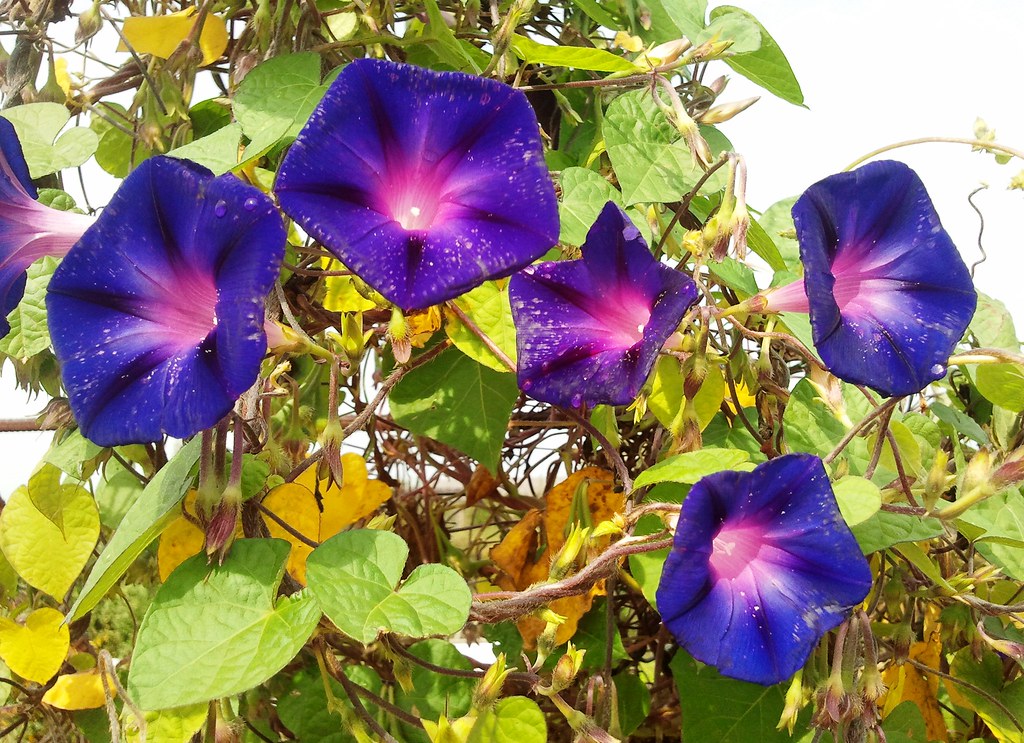
Grandpa Ott's Morning Glory is in radiant bloom in the Author's Garden. This plant inspired Seed Saver's Exchange as it was brought from Germany to Iowa by Seed Saver's Exchange co-founder Diane Ott Whealy's grandfather. Yes, these are plants grown from Seed Saver's.
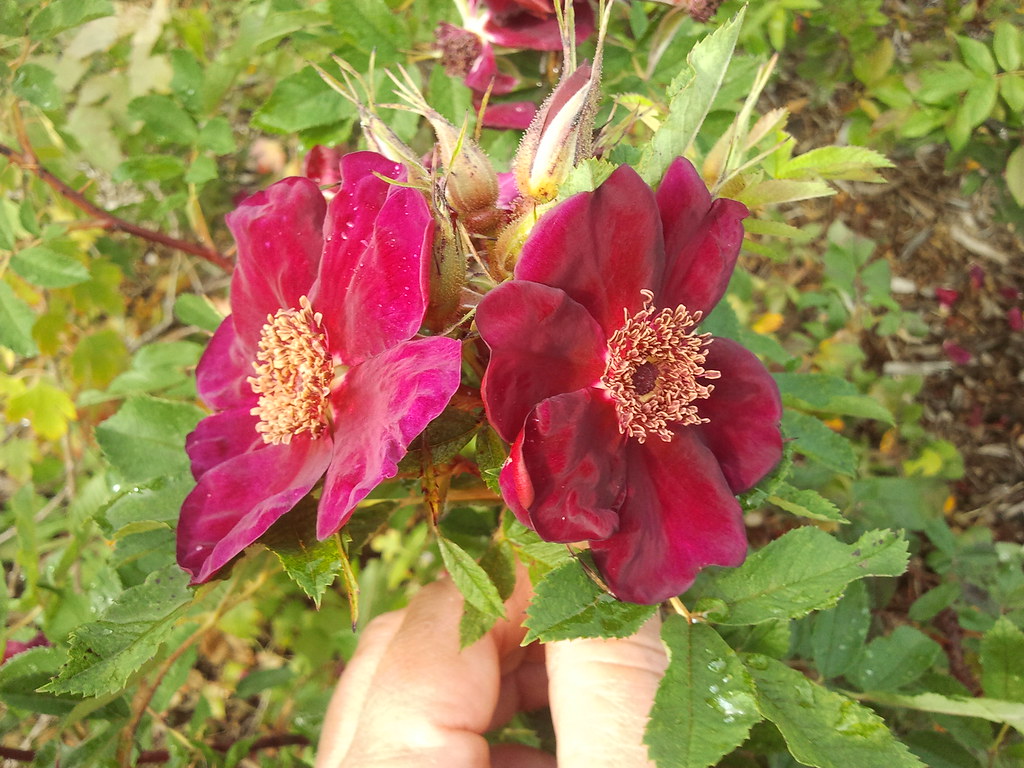
Here is another heirloom plant: Baseye's Purple Rose from the Antique Rose Emporium in Texas. This rose has single flowers of darkest red and produces edible hips -- it reflowers nicely through the season. Look for it between the Vineyard and Author's Garden.
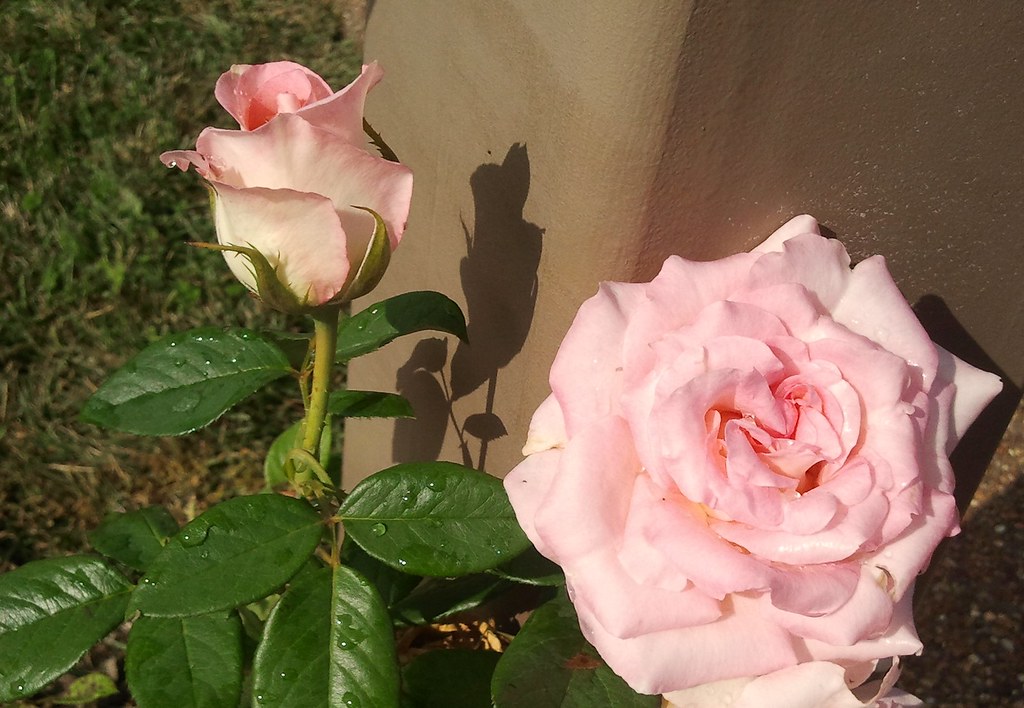
Roses are good at having a second round of flowering now. Here is 'Falling in Love' hybrid tea rose in the Vineyard. Roses have been grown with grapes for centuries and considered the canaries in the mineshaft to grapes -- in other words they indicate cultural problems before it shows on the grapes. This is the only place you will find hybrid tea roses at Powell Gardens, and our plants are young, own root plants.
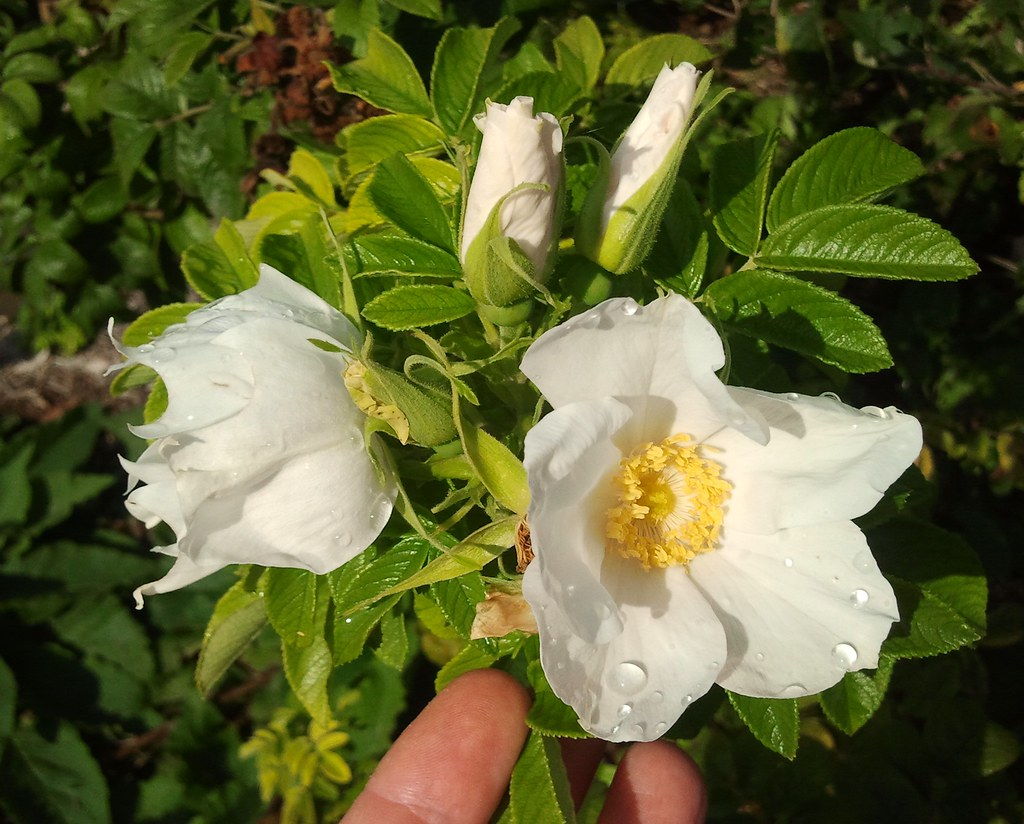
This rose is in the Apple Celebration Court where shrub roses are utilized as companion plants to apple trees. It's our own seedling of the Rugosa Rose cultivar 'Njnveldt's White' and has the most delicious rose petals and largest, most flavorful hips of any rose we grow. Consider using rose petals for a floral flavor in a salad besides making perfume with them.
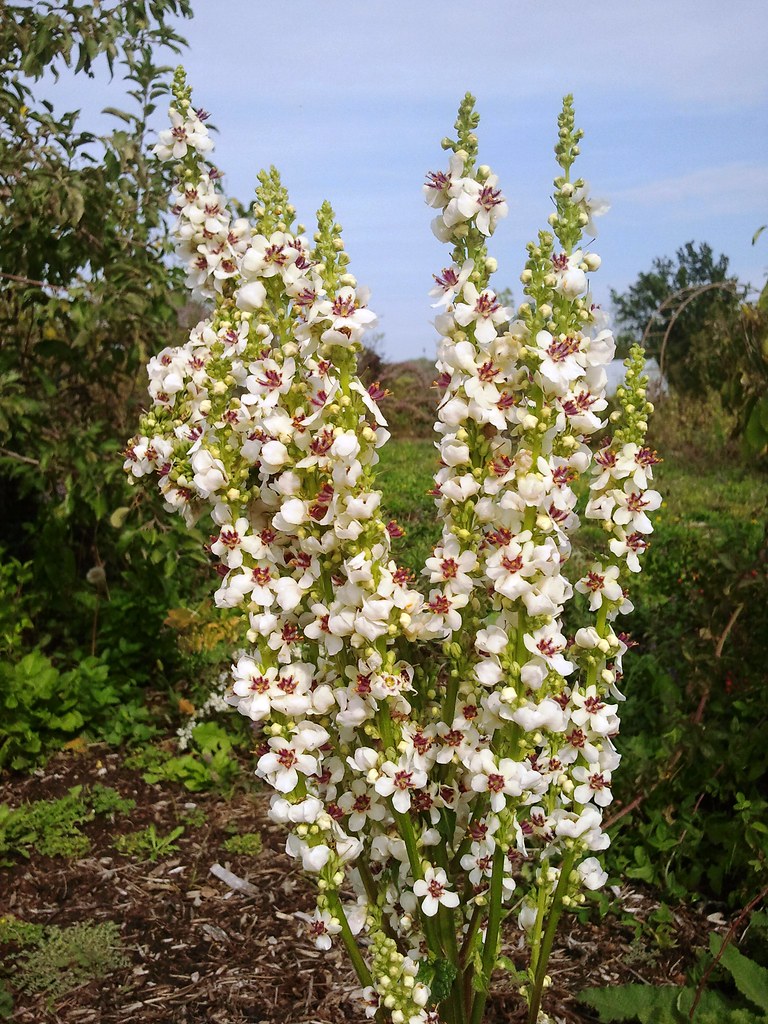
Our Perennial Mullein (Verbascum chaixii 'Alba') is also reblooming spires of white in the Apple Celebration Court. They are planted here as a companion to apple trees because they are considered a trap crop for stink bugs that can damage apple fruit.
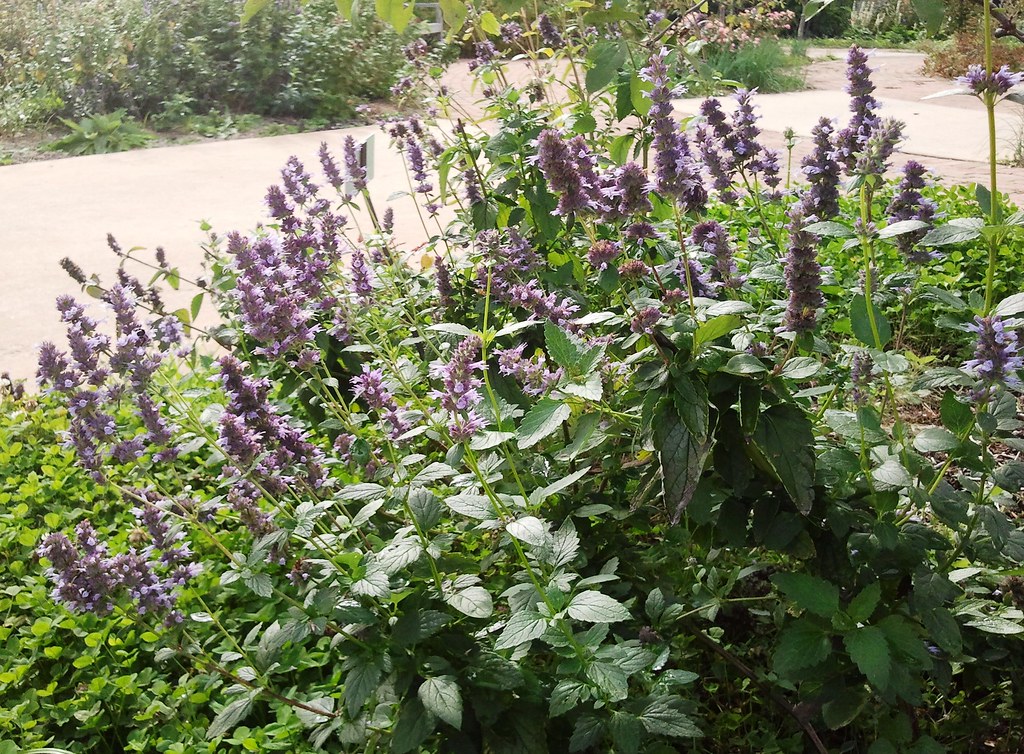
Anise Hyssop (Agastache foeniculum) is another companion plant to the apples -- it attracts pollinators and beneficial insects! It has a wonderful anise aroma to all its foliage and makes a great tea. My favorite part of it is the licorice tasting florets -- yes it is one of the finest edible flowers. I also like it for blooming almost all summer and all the wonderful butterflies and bees it attracts.
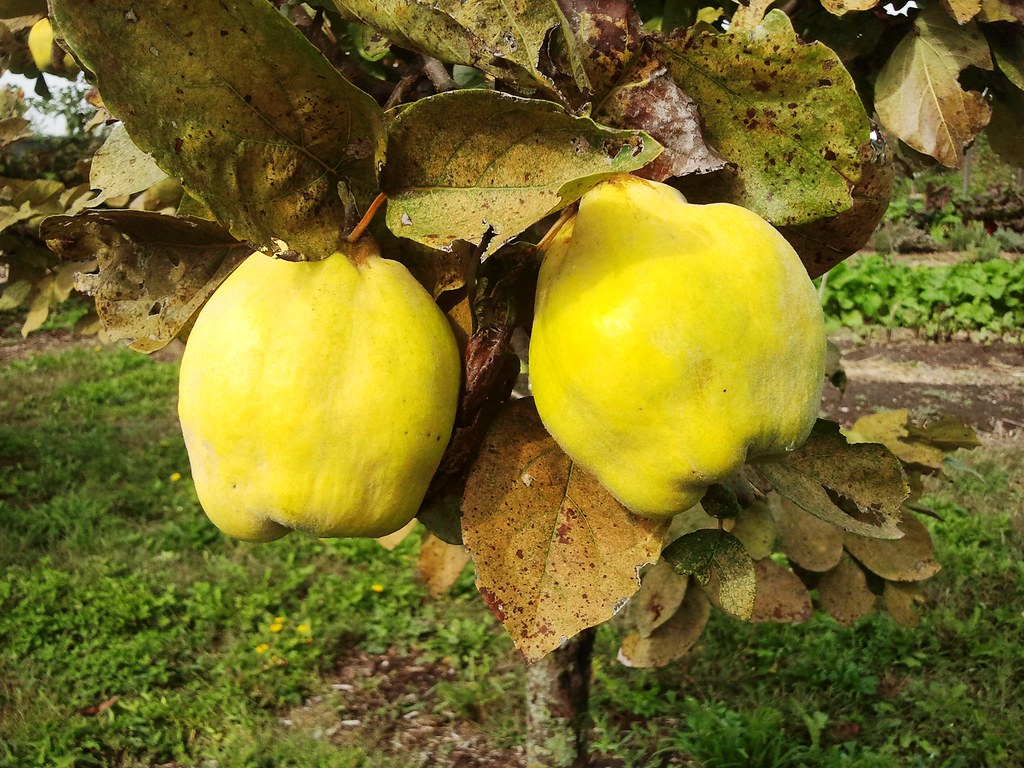
The Quinces (Cydonia oblonga) are also near ripening. I love the beauty of these large, aromatic fruit. Quince are best enjoyed baked as they turn a beautiful pink color when cooked besides becoming soft and palatable! The quince tree between the Vineyard and Author's Garden is currently laden with fruit.
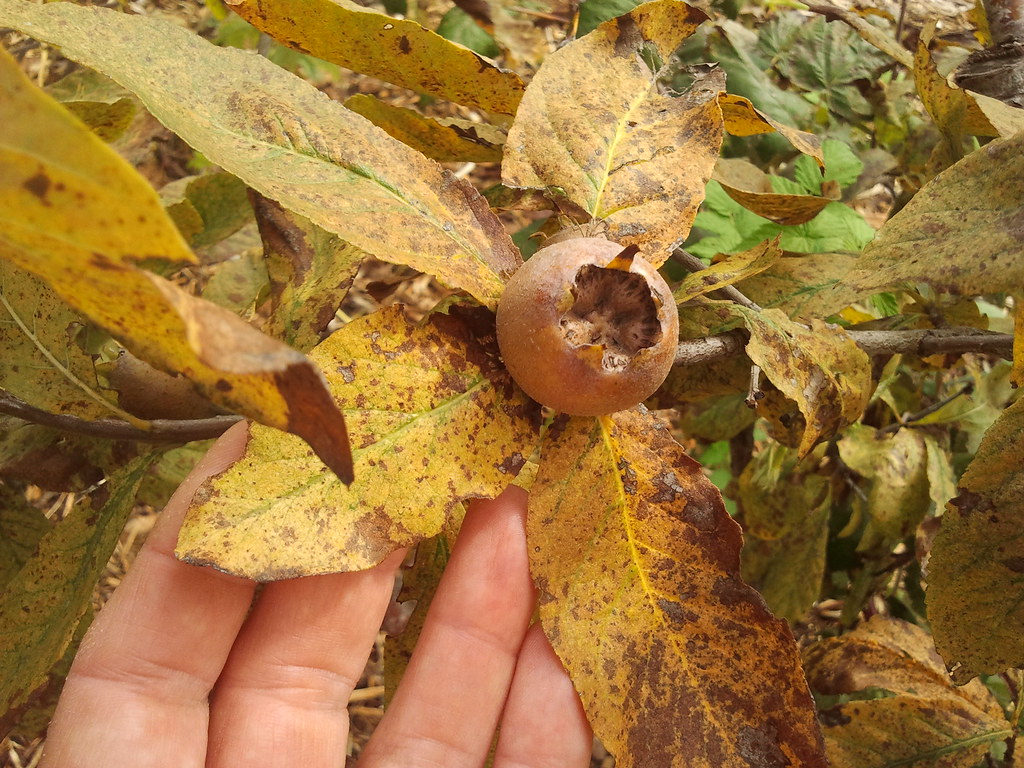
This weird fruit is of the Medlar (Mespilus germanica) and is related to our hawthorns. The fruit is not even close to ripe but is at full size and color. This fruit must blett (rot!) to be palatable! Matt Bunch likes the fruit to drop and weather a bit into December when they soften and have a somewhat apple sauce-like flavor and consistency. Look for Medlar in the Missouri Star Orchard Quilt Garden.
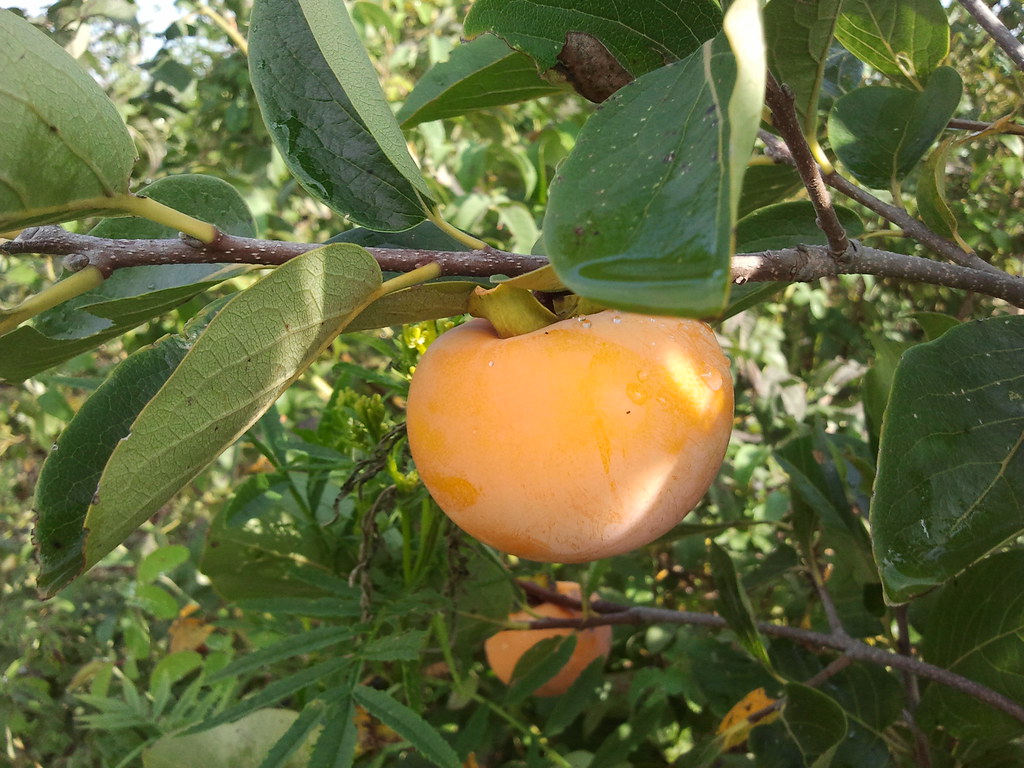
My favorite 'Nikita's Gift' Persimmon (Diospyros virginiana x D. kaki) is recovering from the wild winter a couple seasons back and producing fruit again! This hybrid between the native persimmon and the big Oriental persimmon combines the best of both.
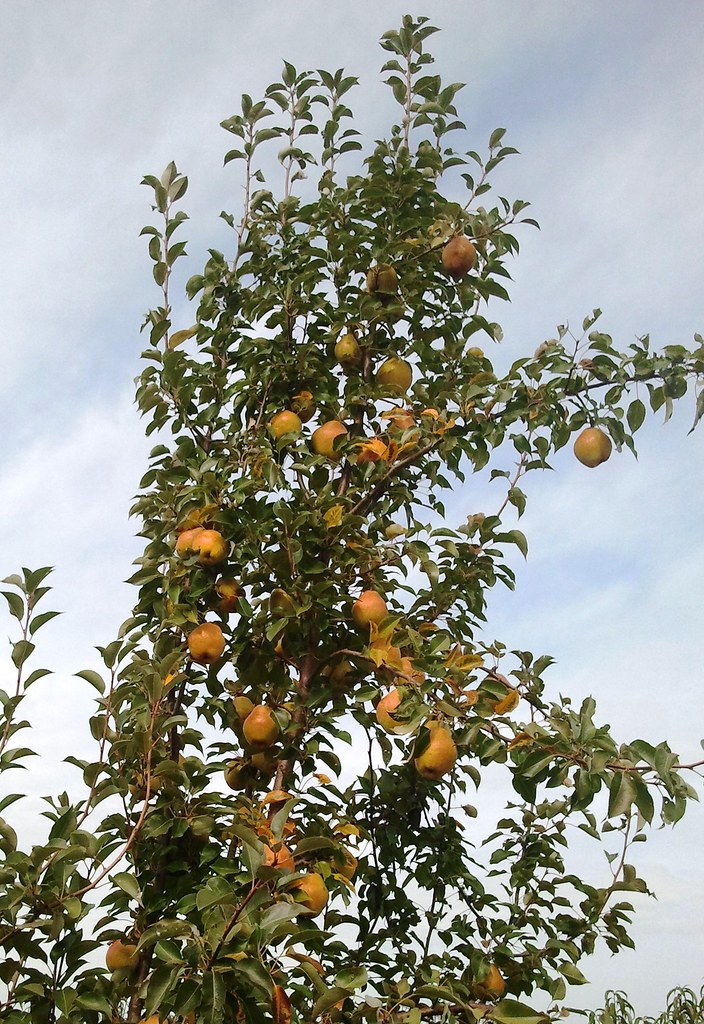
Our Kieffer Pear (Pyrus communis) is loaded with pears again. It certainly is our top producing pear every season. Look for it between the Author's Garden and Peach Court.
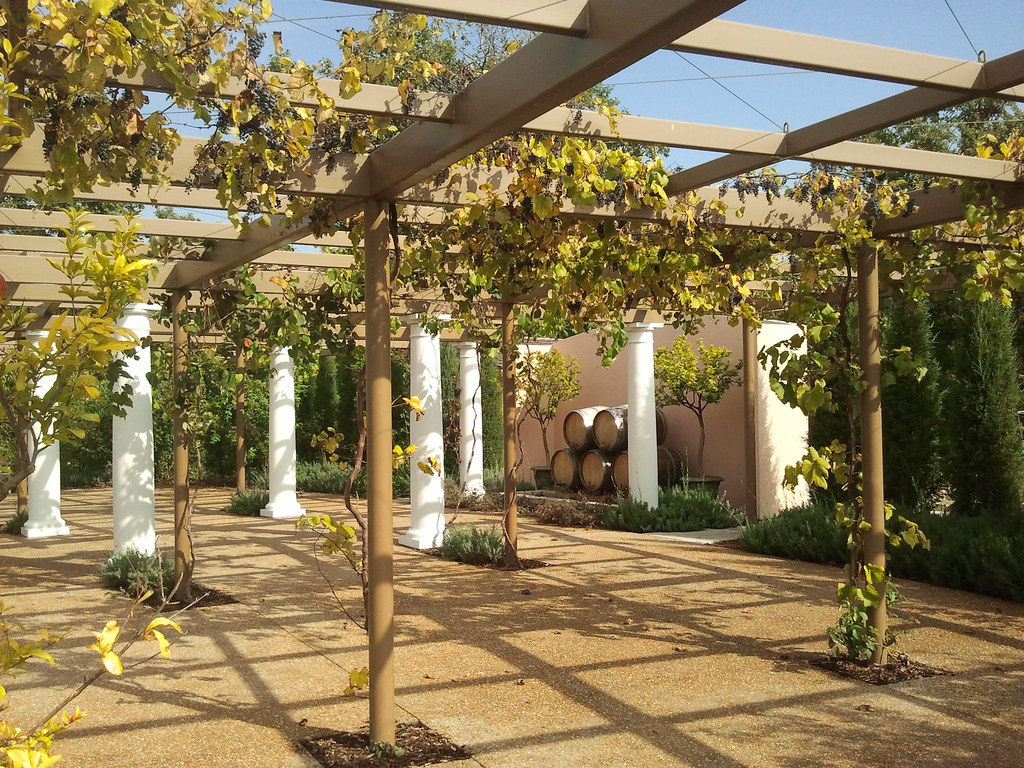
The Vineyard Arbor is starting to get the ambiance we wanted with grapes covering the structure to add shade and interest. Missouri's state grape: Cynthiana / Norton is sure loaded with grapes this season. Grapes were one plant that really loved our hot, dry summer!
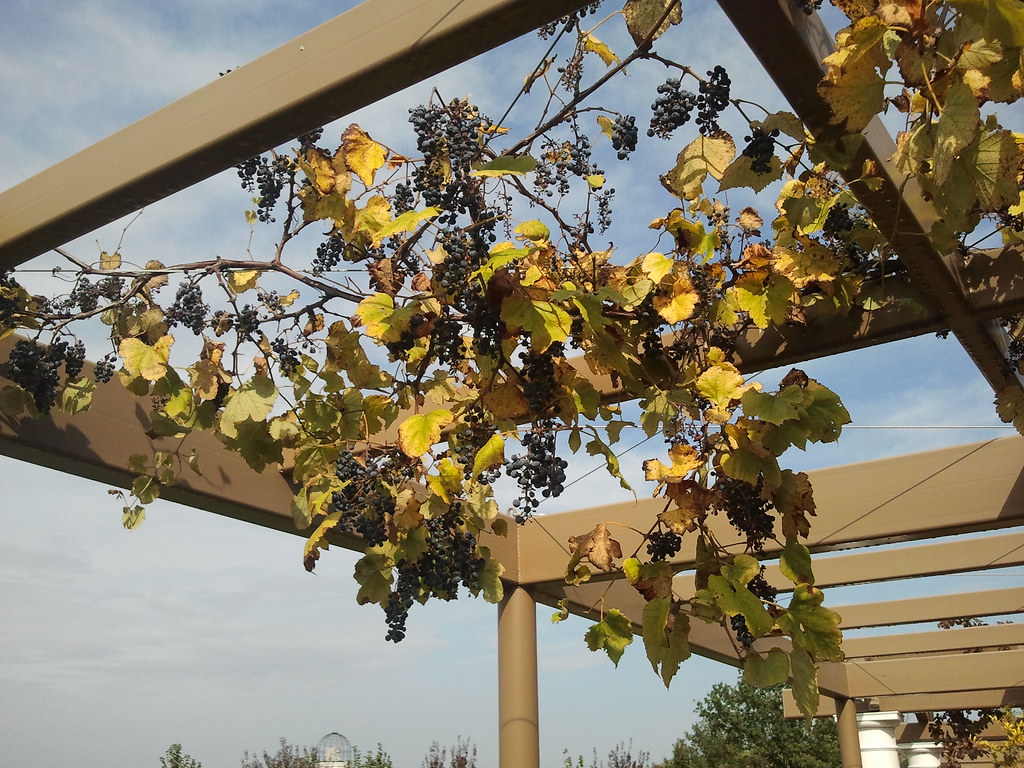
Here's a closer view of the grape-laden Cynthiana / Norton vines. They sure make my favorite Missouri wines and I like to eat them fresh as well. Come out to Powell Gardens and experience the beauty and bounty of the Heartland Harvest Garden. It is full of all sorts of unique plants that offer beauty as well as culinary delights.
Thursday, September 27, 2012
Fall Delights in the Heartland Harvest Garden


Thursday, September 20, 2012
Sweet September
We have received many comments of "what looks good at Powell Gardens?" since the drought. I can honestly say many things look marvelous. There are flowers and foliage in every color of the rainbow! Here's a sample of some things that captured my attention today. I just got a new computer so am back in business with sharing photos and continuing the Powell Gardens blog.

'Sizzler Red' Salvia (Salvia splendens) is the RED in the rainbow terrace garden bed outside Cafe Thyme.

Winterberry Holly (Ilex verticillata) is also showing its vibrant red berries that last into winter. This is the cultivar 'Winter Red' along the walk to the Rock & Waterfall trolley stop.

'Profusion Orange' Zinnia shows riotous shades of orange. It's flowers fade with age but I actually like the variation in its flower colors. Look for it in the rainbow terrace bed outside Cafe Thyme.


'Lemon Gem' Signet Marigold (Tagetes tenuifolia) are blooming in the Heartland Harvest Garden's Menu Garden. They are edible but best as a companion plant that attracts beneficial and pollinating insects.
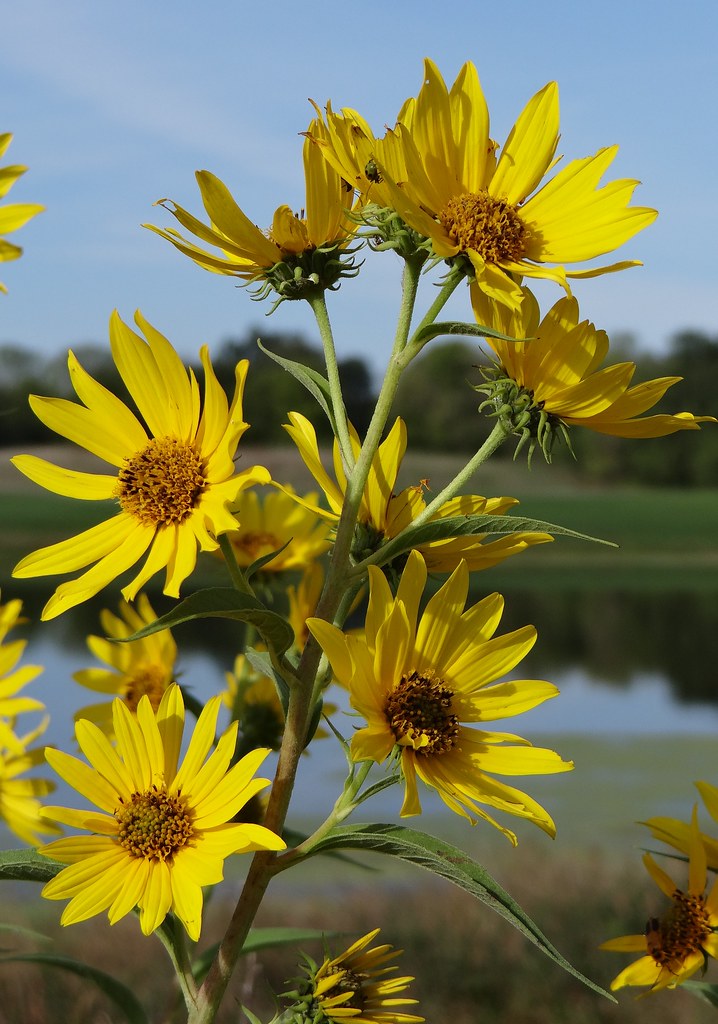
Many species of perennial sunflowers are in bloom throughout the gardens: this is Maximilian's Sunflower (Helianthus maximilianii) in the meadow. If you visit, be sure and give all these different sunflowers a sniff. Most of them smell like cocoa from sweet cocoa to bitter cocoa depending on the species. This one smells like a wonderfully rich cocoa!

Curly Parsley (Petroselenium crispum 'Triple X') was one of the greenest plants I photographed in the gardens today. Grow it for its beautiful texture, garnish, flavor, or as a host plant for the Black Swallowtail butterfly!


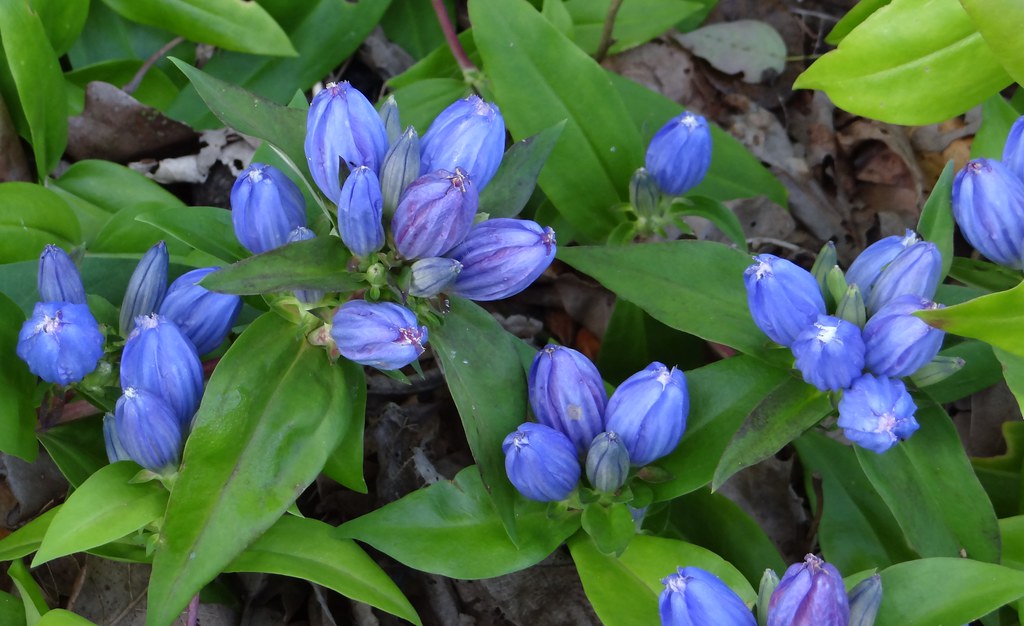
There is no blue like gentian blue and the native Closed Gentian (Gentiana andrewsii) is now in full bloom in the Perennial Garden. This native is actually easy to grow in moist soil in part shade. Its flowers are pollinated only by big, strong bumblebees that open up the fringe-tipped end of the flower, completely go inside the flower for a major nectar treat and then emerge a happy bee!
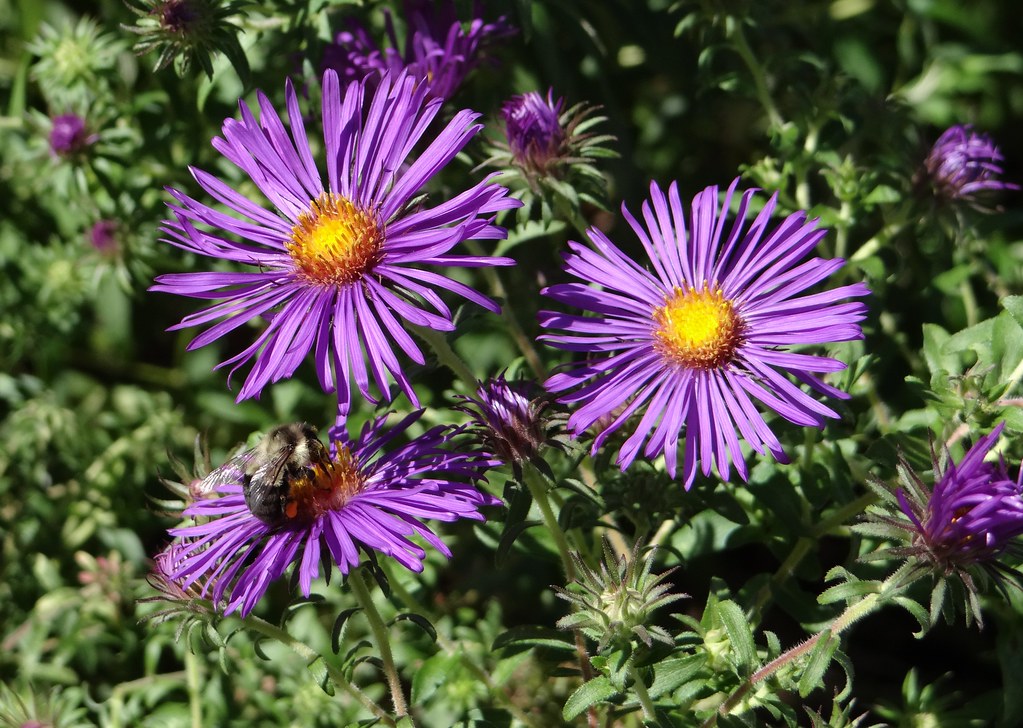
The Aromatic Aster (Aster oblongifolius) is beginning to bloom along the Living Wall on the Island Garden. When in full flower it is like a billowing cloud of purple along the east end of the garden.
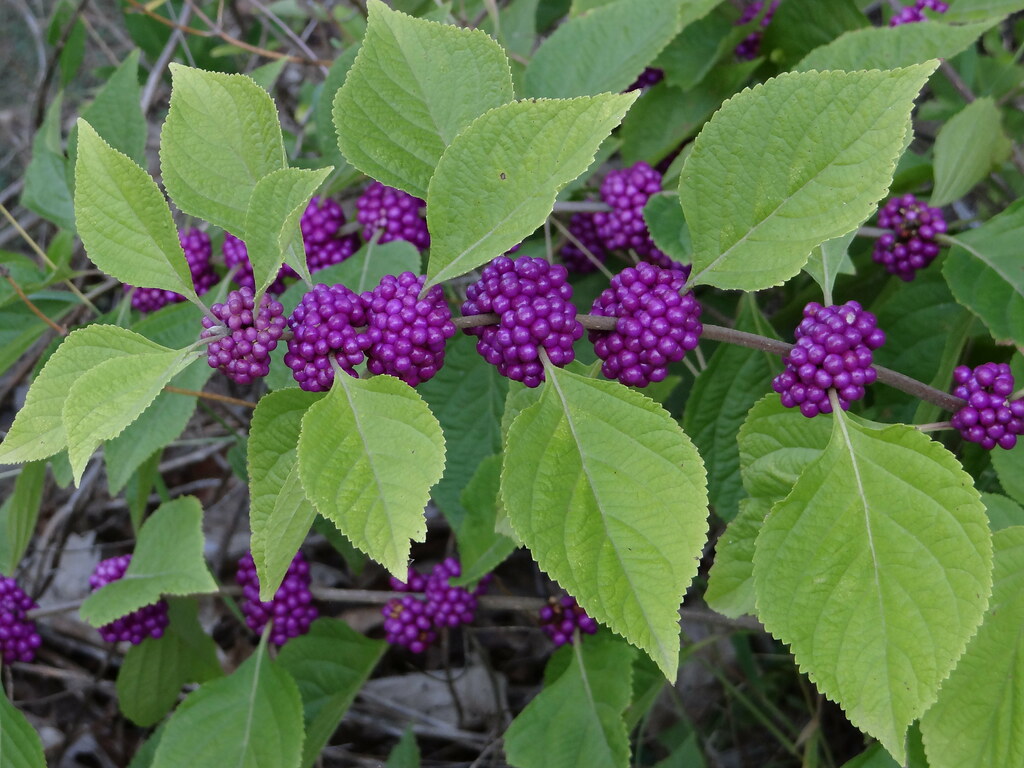
The vivacious purple berries of American Beautyberry (Callicarpa americana) are in full fall splendor by the fountain at the Chapel. This shrub is native to the American South and does reach southern Missouri. It has to be seen in person to appreciate!

So come out and experience the colors of September at Powell Gardens. Our gardeners did a phenomenal job of caring for the plants through the summers unprecedented heat and drought. Kudos to them!! The refreshing September air and softer sun sure make the garden shine now so don't delay and miss the late summer/early fall bounty of the garden.
Wednesday, August 1, 2012
Festival of Butterflies 2012!
The Festival of Butterflies 2012 will display many new tropical butterflies in the Conservatory so is sure to be a crowd pleaser. Three species of spectacular Owl Butterflies, 2 new Morpho species added to even more popular and friendly Blue Morphos and a bunch of other colorful species are sure to entertain and challenge the visitor with butterfly identification skills.
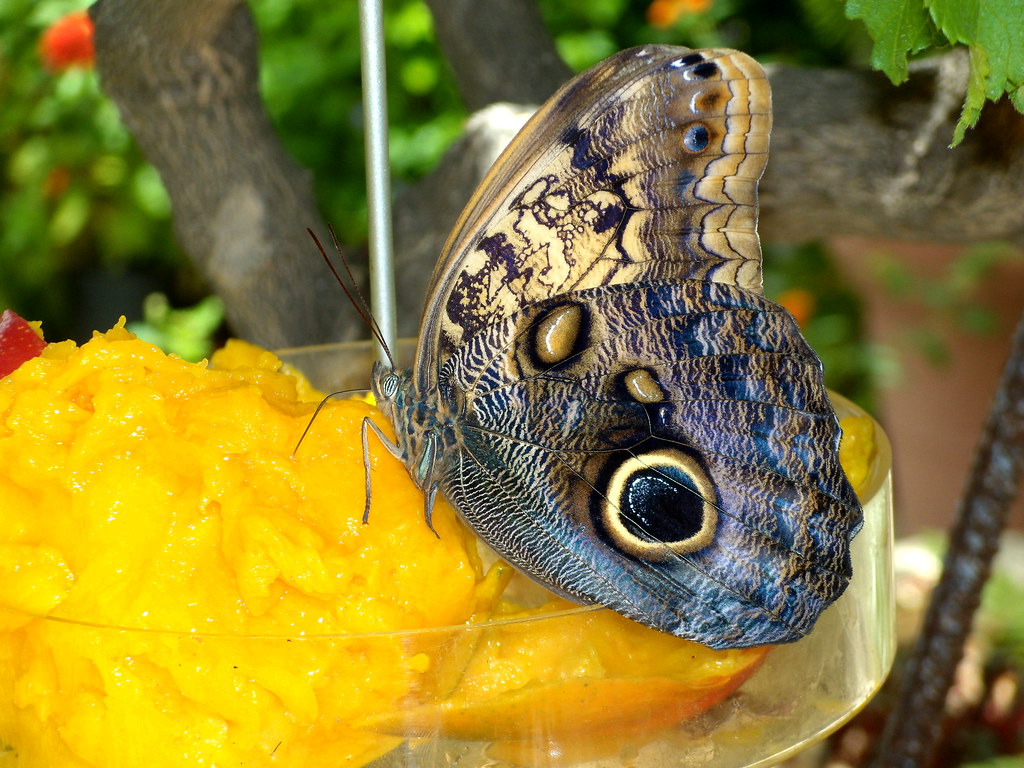
Here a Giant Owl (Caligo memnon) drinks from a mango at one our butterfly feeding stations. Many of the new butterflies in the Conservatory don't feed on flower nectar but prefer over-ripe fruit.
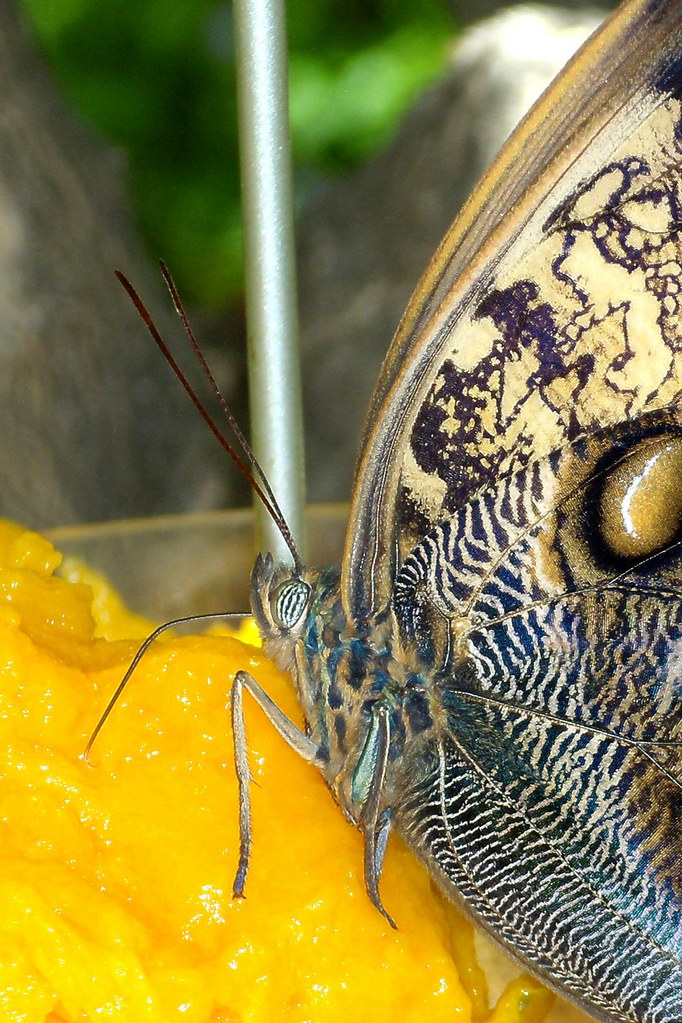
Here is a closeup of the butterfly's head so you can clearly see his straw-like proboscis bending into the fruit.
Owl butterflies have amazing markings upon close inspection!
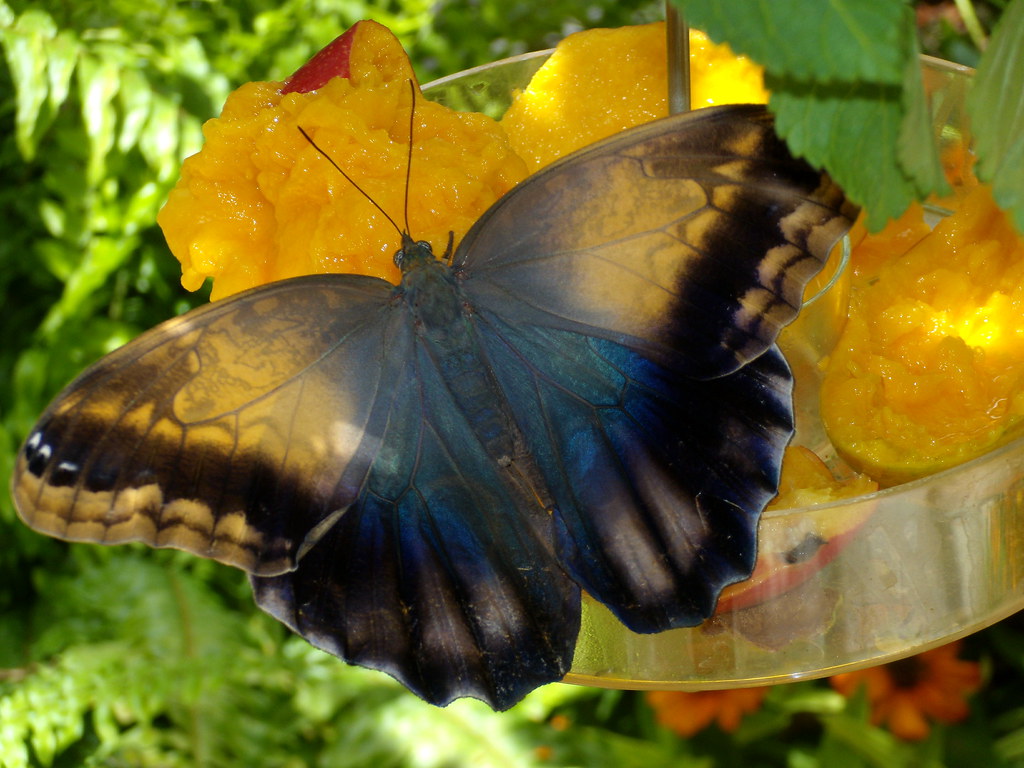
Owl butterflies rarely open their wings but when they do it is a photo opportunity! Our Receptionist and photographer Roland Thibault was there to capture this moment too when the Giant Owl opened his wings to show his amazing creamy-tan and smoky blue coloration. Owl butterflies are CREPUSCULAR -- that means they are most active at dawn and dusk.
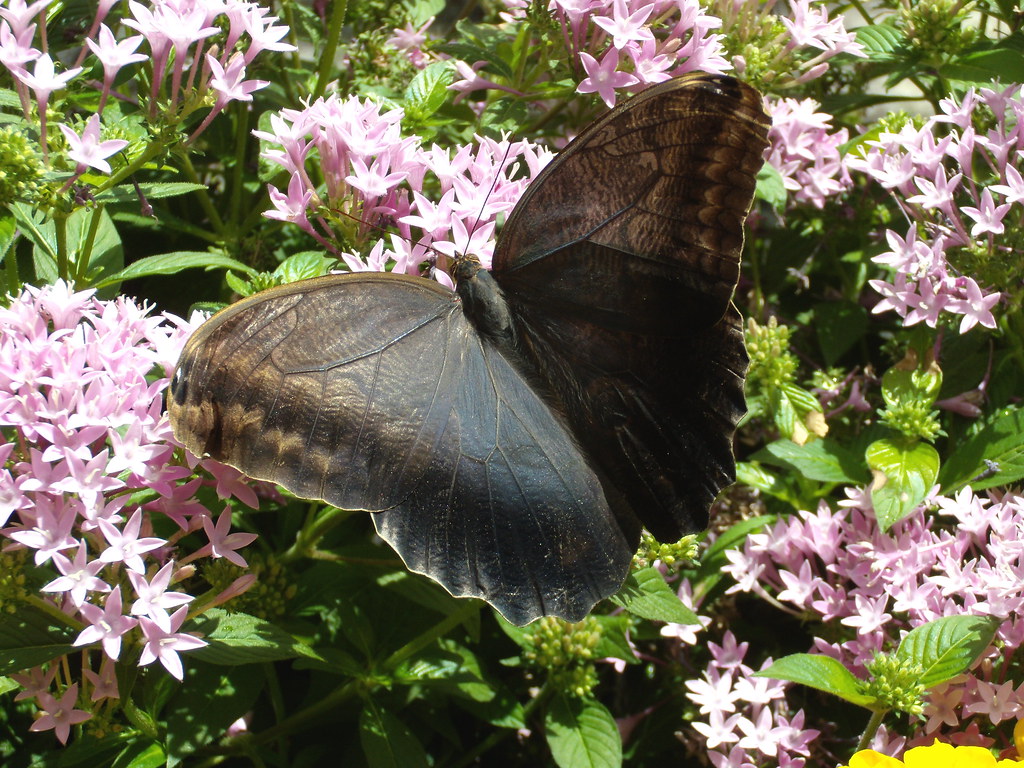
Though Owl butterflies look pretty similar with their big "owl" eyes, they are clearly different when they open their wings. This is the Forest Mort Blue Owl (Caligo eurilochus) with gorgeous slate-blue to iridescent blue -- you have to see it in person as the camera just can't capture its intriguing colors. Owl butterflies are BIG too, one third larger than the morphos!
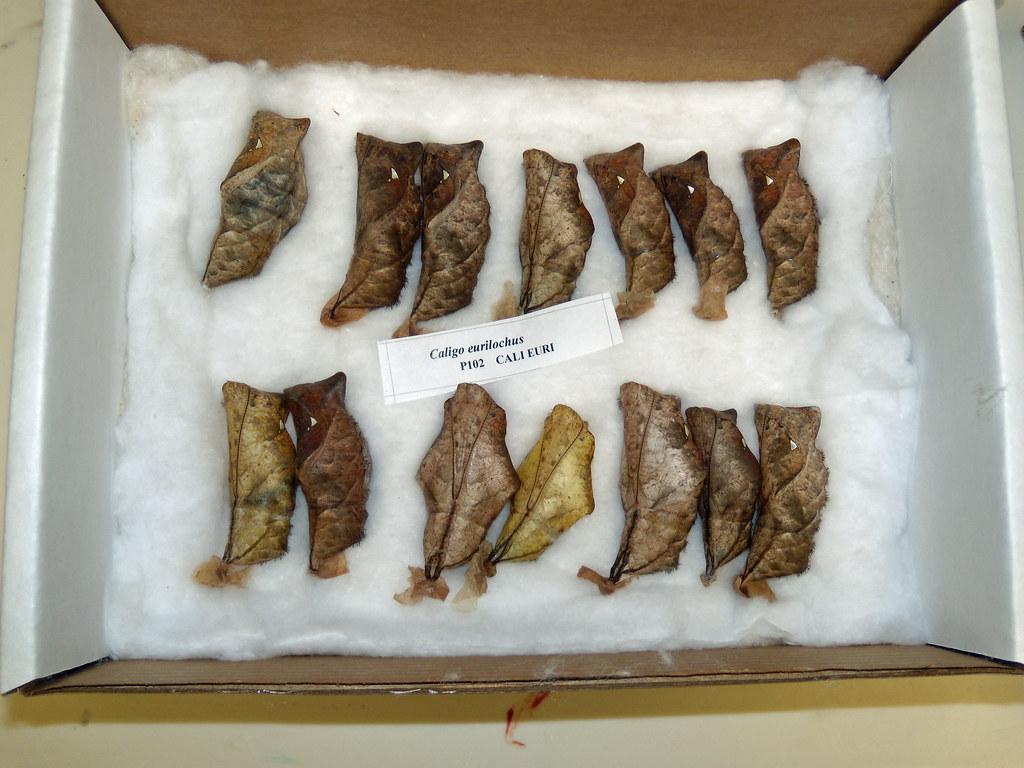
Here's how the Owl butterfly chrysalises or chysalids look when they arrive packed in a cotton-like material to keep them cool and undisturbed. Can you guess what they mimic? Turn this image upside down and that will help -- they mimic hanging bats, complete with silvery fake eyes that glow in the dark shadows of the rain forest where these butterflies originate. From the back they mimic a dead leaf complete with all the leaf veins. Of course, all our tropical butterflies are farm raised in Costa Rica, El Salvador, Columbia or Ecuador. We have USDA permits to have and display these imported creatures.
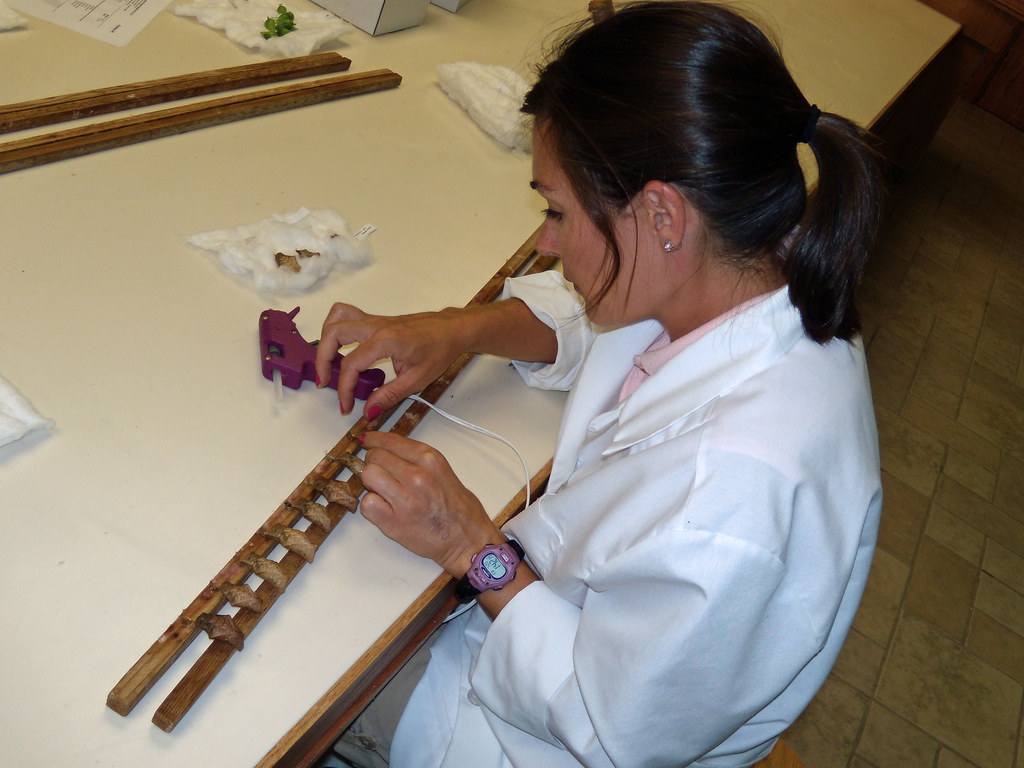
Stephanie Acers our Youth Education Coordinator is one of several staff trained and authorized to unpack and mount the chrysalises so they can emerge as butterflies. Yes, we actually glue the chrysalises to dowels that are placed in USDA approved emergence cases.
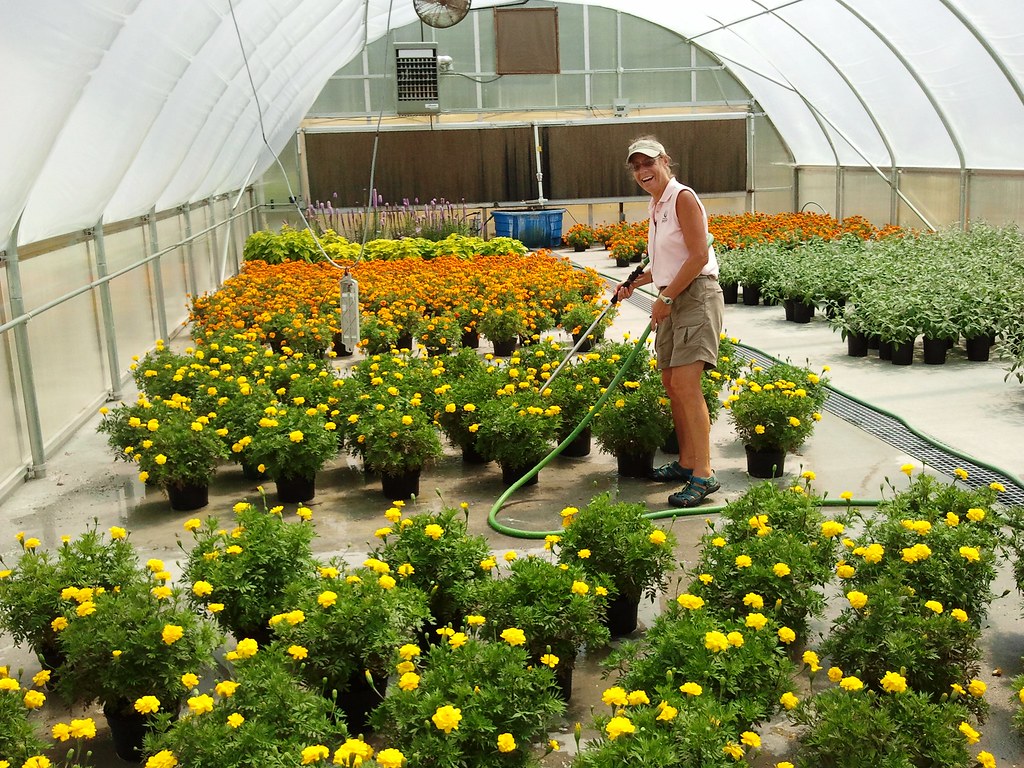
Donna Covell, Greenhouse Horticulturist, laughs while watering flowers (marigolds) for the Festival of Butterflies. This greenhouse has a cool cell in the back (the big brown rectangles behind her) that keep it cooler towards the back. Most of our butterfly plants must be watered twice a day in these extreme conditions.

Most of the flowers we grow to feed our butterflies are outdoors where Mother Nature does a great job of pest control. These are various Pentas which have very nectar rich flowers. We cannot use any pesticides which kill butterflies!
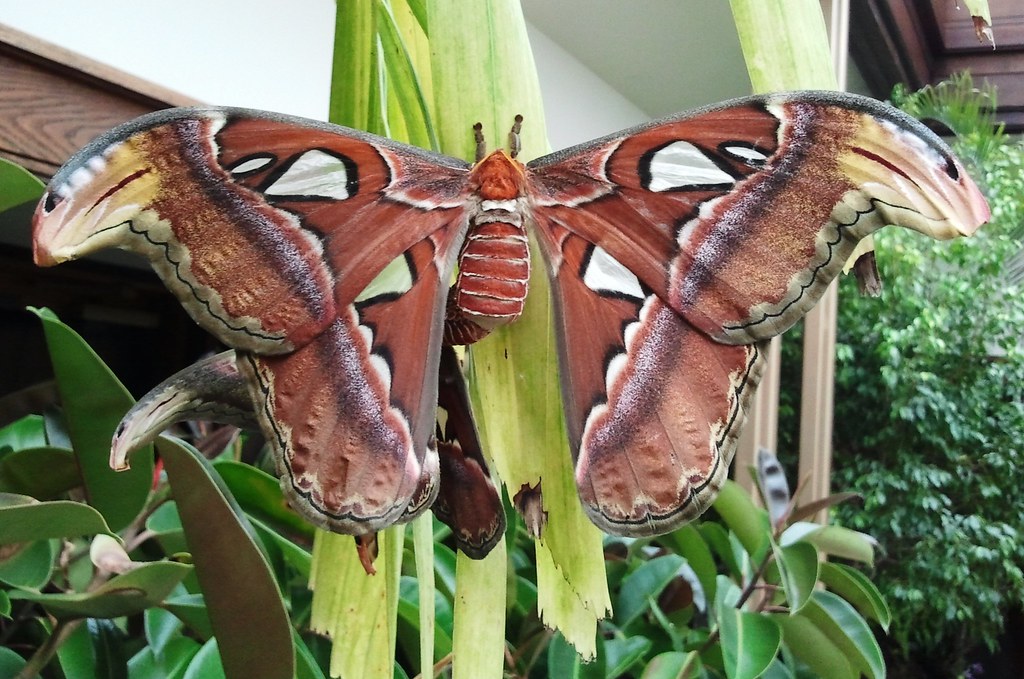
We have received 60 fresh Atlas cocoons from Malaysia and they have been emerging and this is one of our huge females which measures 12" across. Atlas Moths are considered one of the 3 largest moths on Earth.

This is a male Atlas Moth and males are much smaller as they do not have an abdomen full of 100's of eggs. You will see these up close during the festival but if you participate in our Moths and Milkshakes evening event you will get an even closer encounter.
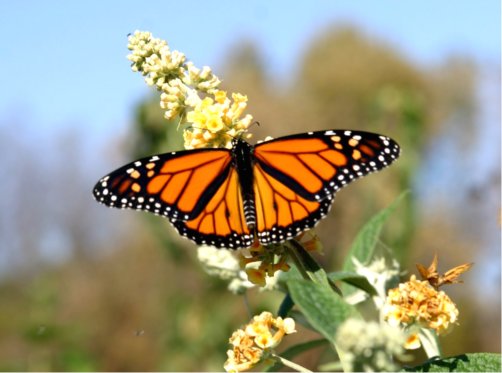
The native butterflies like this male Monarch are not faring so well with this season's drought. We conducted our annual North American Butterfly Association official butterfly count here on Saturday and found the fewest number of Monarchs in 10 years. There still will be plenty of Monarchs on display in the Caterpillar petting zoo and Monarch Watch tent during the Festival. How can you help the wild Monarchs? (see below)

We will have 2 types of tropical milkweed (Asclepias curassavica), 'Silky Gold' (pictured) and 'Silky Red' (off to the left and back in this image) for sale during the Festival. Tropical Milkweed are great nectar sources for migrating Monarchs and also good food for this season's last generation of caterpillars. As most native milkweeds have gone dormant or are struggling in the heat, these plants are lush and in bloom and will provide the perfect food for migrating Monarchs. Just plant them near where you can readily water them or put them in containers on your porch or patio and enjoy the butterflies they attract. We will also have various colors of butterfly bush for sale which is a great nectar source for Monarchs and almost all other butterflies as well.
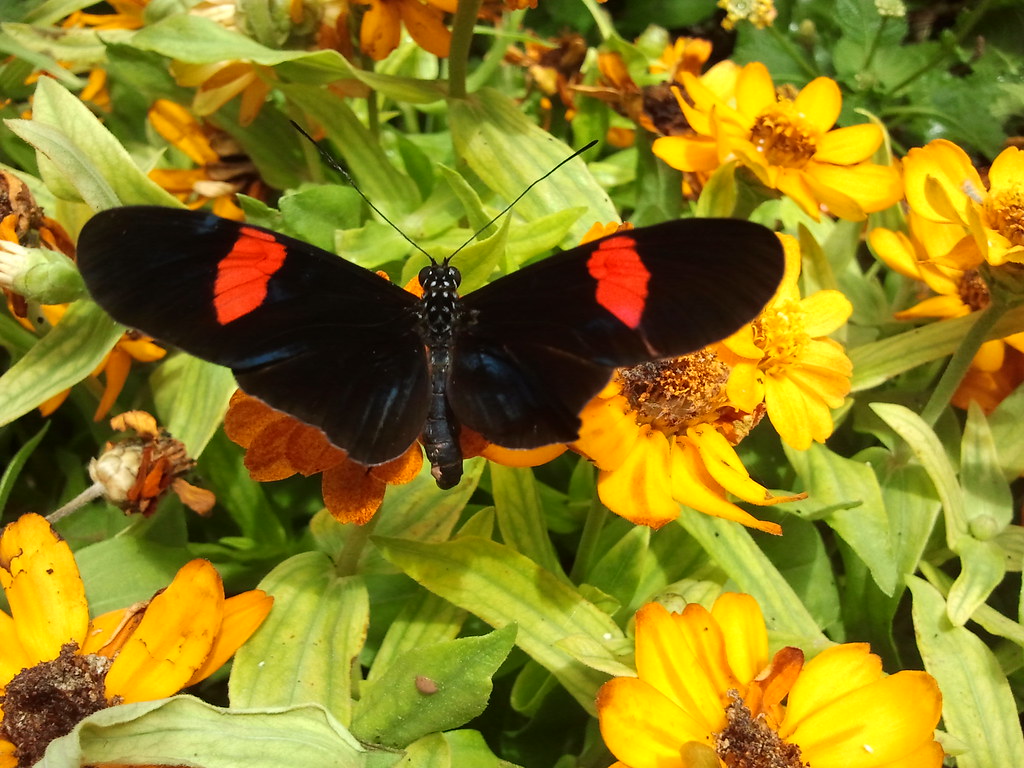
Here's another one of our new butterflies: one of the forms of the Postman Heliconian. The Festival of Butterflies opens Friday, August 3rd at 9 a.m. and we hope to see you here to celebrate butterflies, one of the most beautiful creatures one can find in a garden.


