Showing posts with label summer flowers. Show all posts

Thursday, May 31, 2012

Summer's Early Start

The warmest spring in history has brought about the earliest flowering and fruiting ever recorded for many plants at Powell Gardens.  Meteorological "Summer" begins on June 1st and a visit to the gardens now will reveal some shocking plants at their prime nearly a month ahead of "normal" schedules.  The pulsing buzz of the dog day or scissor-grinder cicada can already be heard -- normally a sound of the Dog Days of summer.
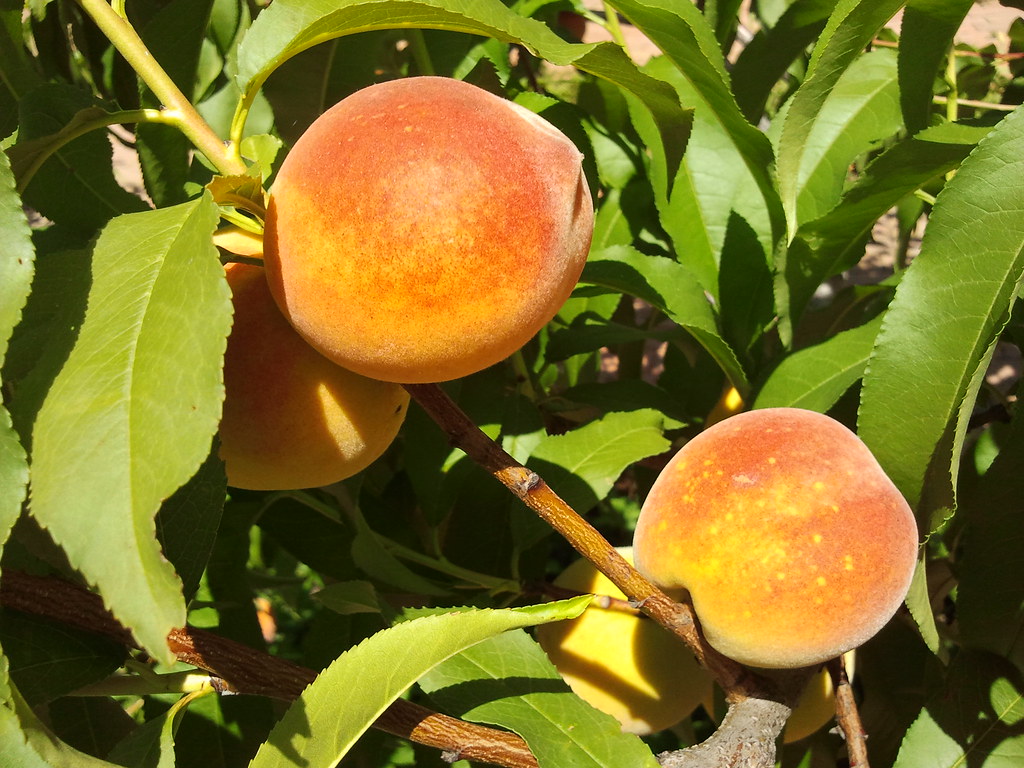


Peaches ripe in May?  Yep, that's a first and what a welcome to summer's early start at Powell Gardens!  These are 'Harrow Diamond' Peaches from Canada and have proven a hardy, flavorful and EARLY variety for our region.  Try a taste of fresh peaches at the Heartland Harvest Garden's tasting station and check at Refresh-- the snack shop at the Missouri Barn to see if any are for sale to take home too.
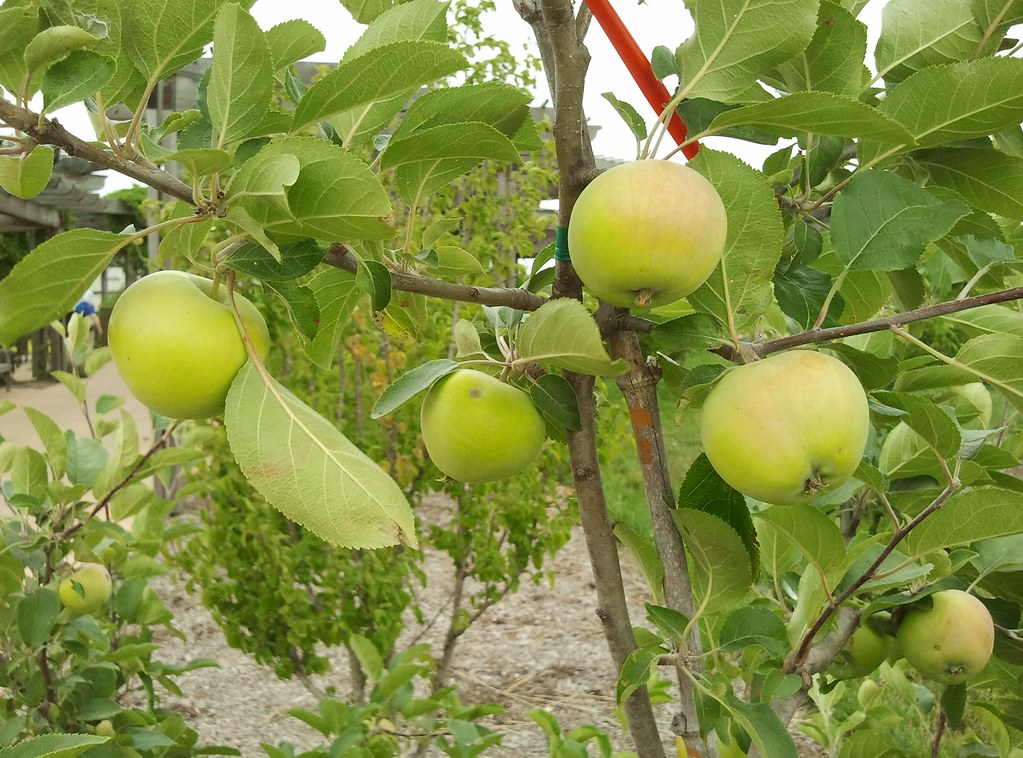
Apples are showing surprising sizes already too.  Here are some 'Yellow Transparent' Apples in the Quilt Gardens.  'Lodi' is our earliest apple in the Heartland Harvest Garden and I can see it will be ripe and ready for fresh baked good in just a couple weeks!


These are not raspberries but ripening Blackberries -- usually a fruit of much later, it won't be long until these are ready for picking (they turn black when ripe).  The abundance of berries in the garden is astounding after our mildest winter AND spring on record.
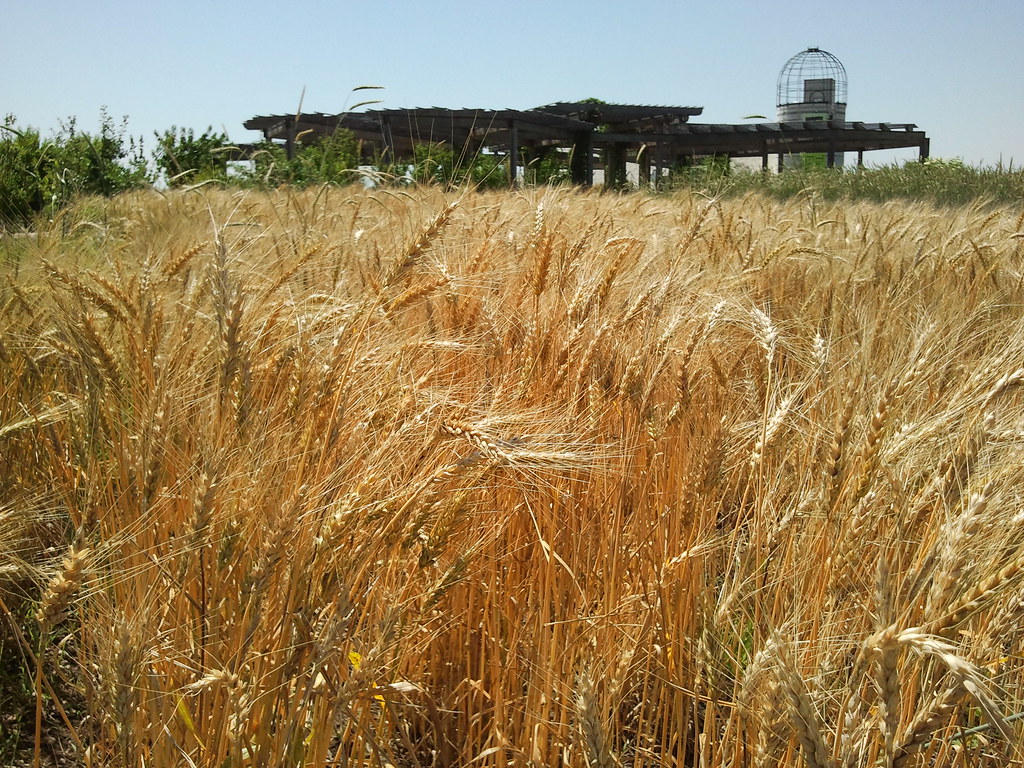

Ripe winter wheat in the Old Missouri Quilt Garden is also a first for this early.  Here's your chance to see this beautiful grass up close and be sure to see its contrasting color enhancing the quilt pattern of the garden when viewed from the Silo's observation deck.
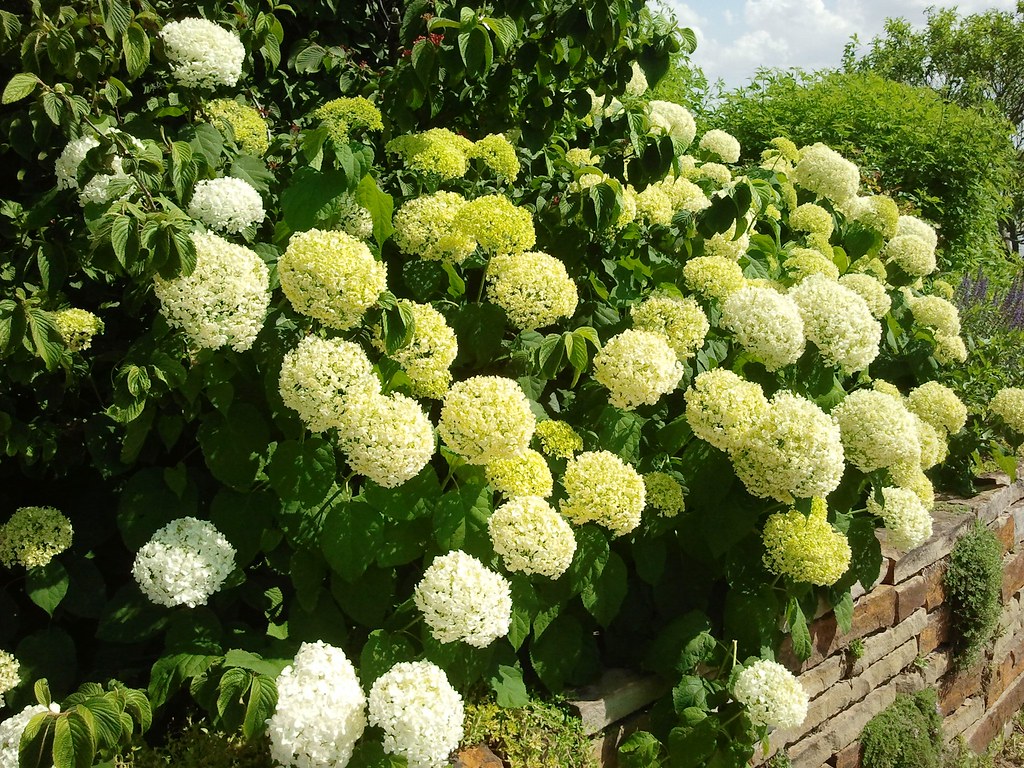

The flouncy puff balls of the Annabelle hydrangea's flowers are making their change from lime to cream and white so are at their peak of beauty in the garden.  Normally a flower of midsummer they are a sight to savor now on the Island Garden.
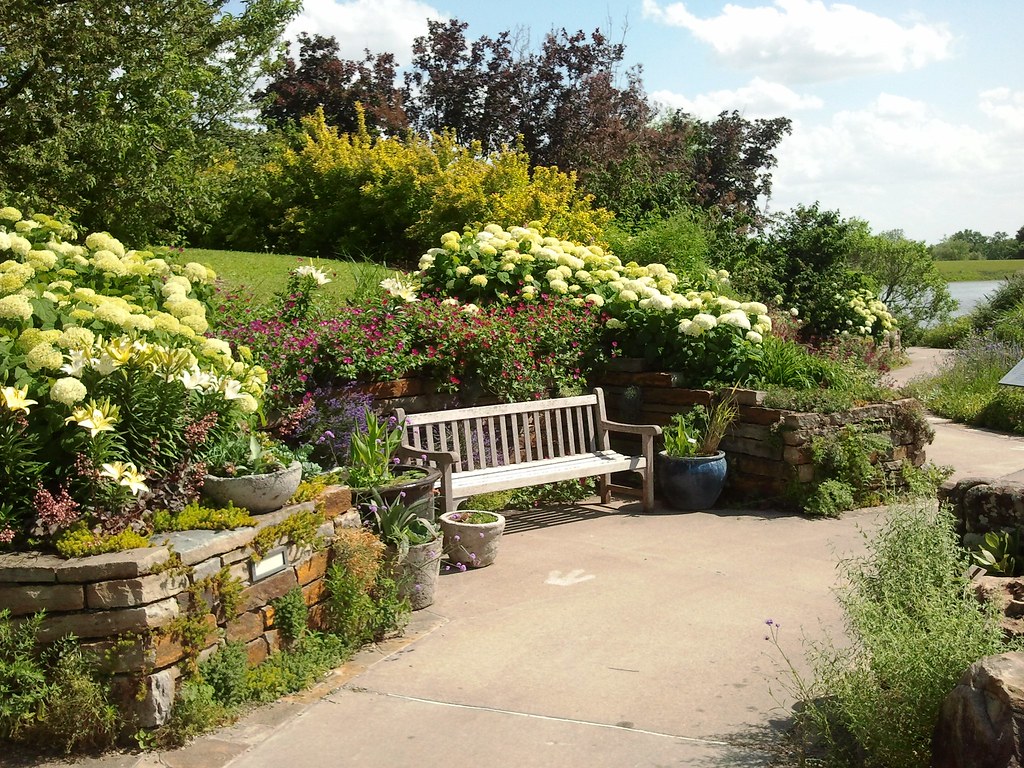

Come sit a spell on the Island Garden and find yourself ensconced in flowers in all shapes and sizes from little cuties on the living wall to the waterlilies in the pools and of course be among the gorgeous hydrangeas.
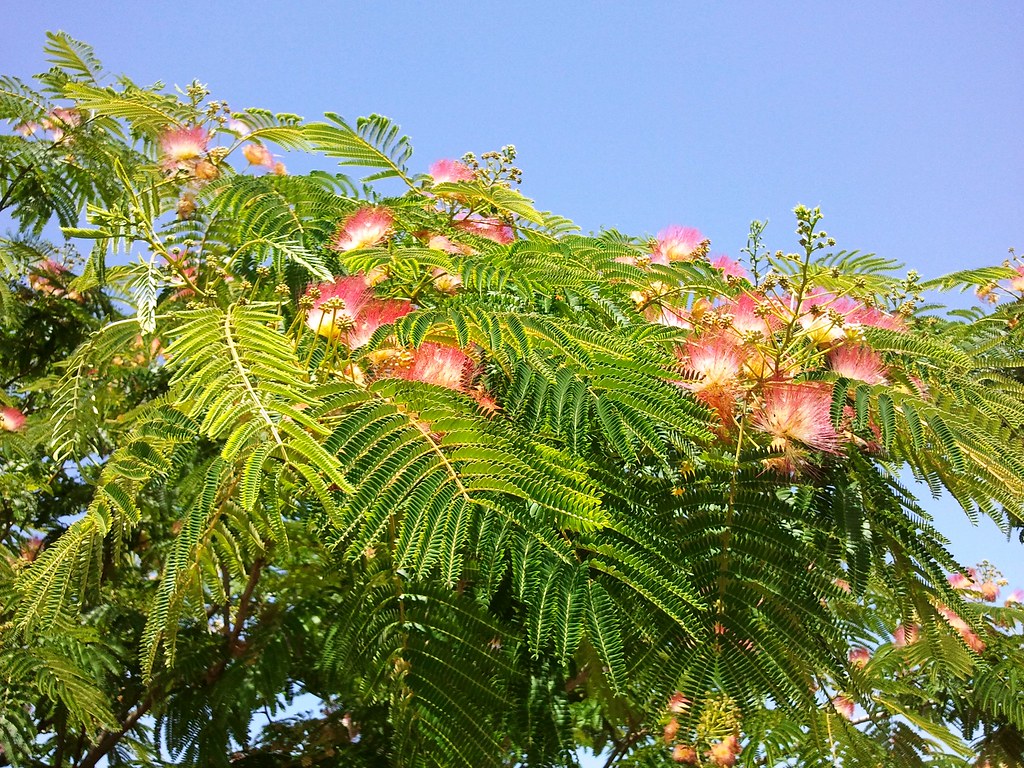

The Hardy Mimosas (Albizzia julibrissin var. rosea 'E.H. Wilson') are also in bloom with their powder puff flowers of vibrant pink.  Hummingbirds and butterflies love these lightly fragrant flowers and they can be seen north of the Visitor Center.
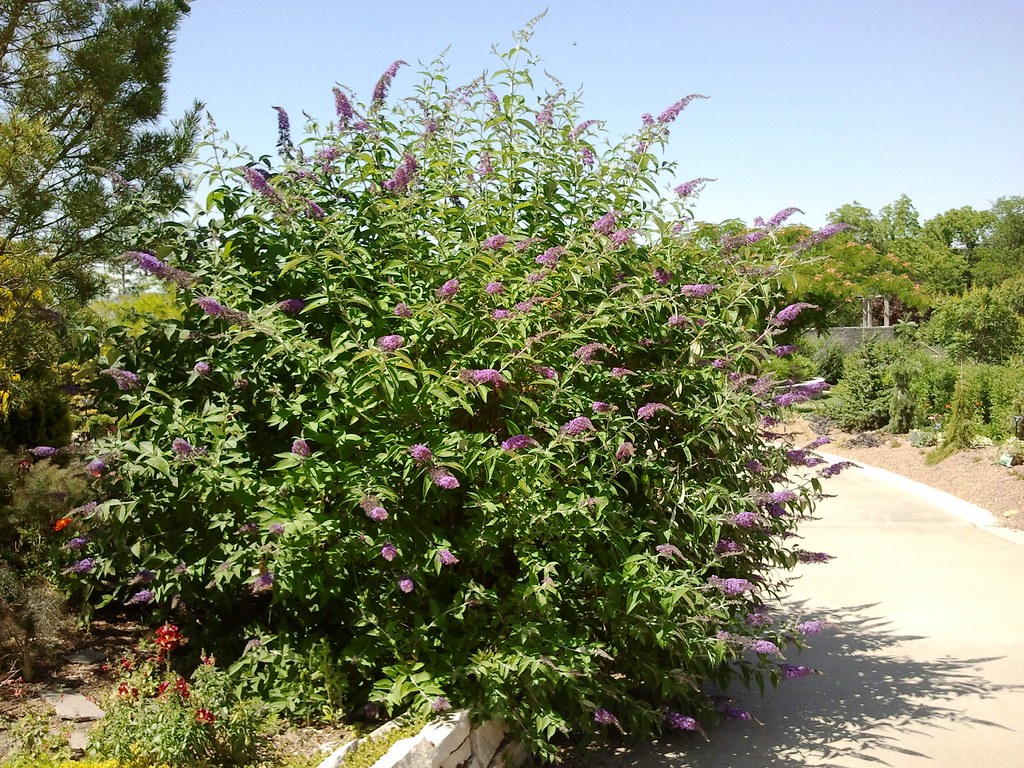

Butterfly Bushes (Buddleia davidii) have reached unprecedented sizes of 8 feet tall and 8 feet wide and are in FULL bloom already.  Watch for our flying flowers (butterflies) imbibing nectar from their wonderfully fragrant flowers throughout the gardens.
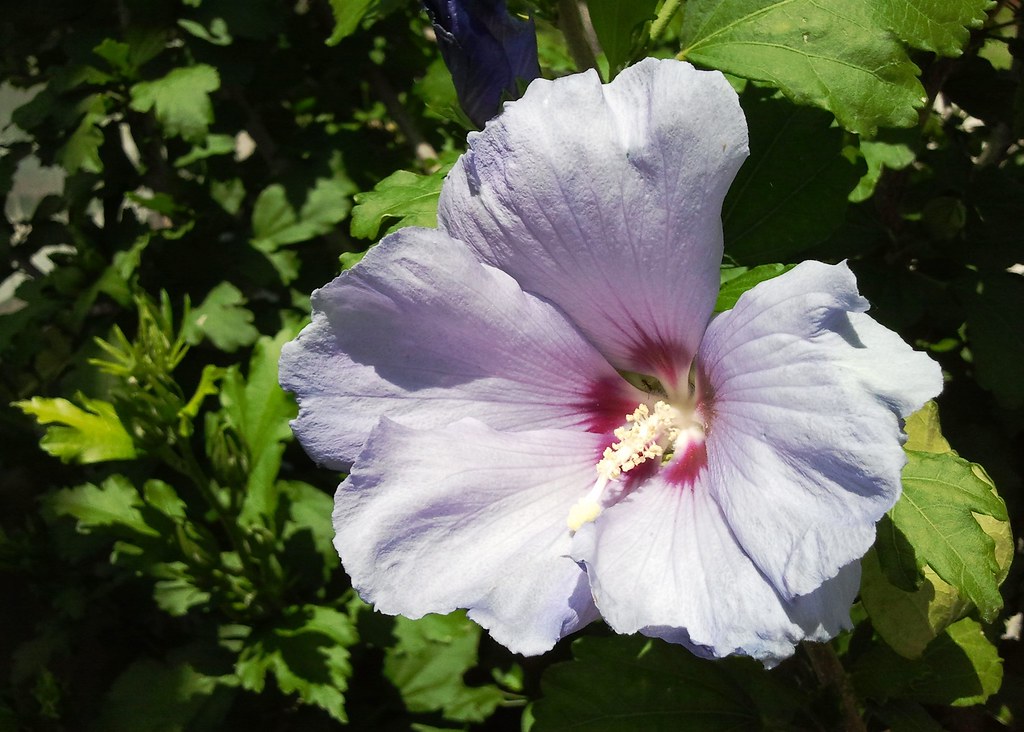
I was shocked to see the Rose-of-Sharons (Hibiscus syriacus) are already in bloom too.  This is the cultivar 'Bluebird' besides the Heartland Harvest Garden's Seed-to-Plate Greenhouse.  These flowers ARE edible and make a spectacular garnish to a summer plate or salad.
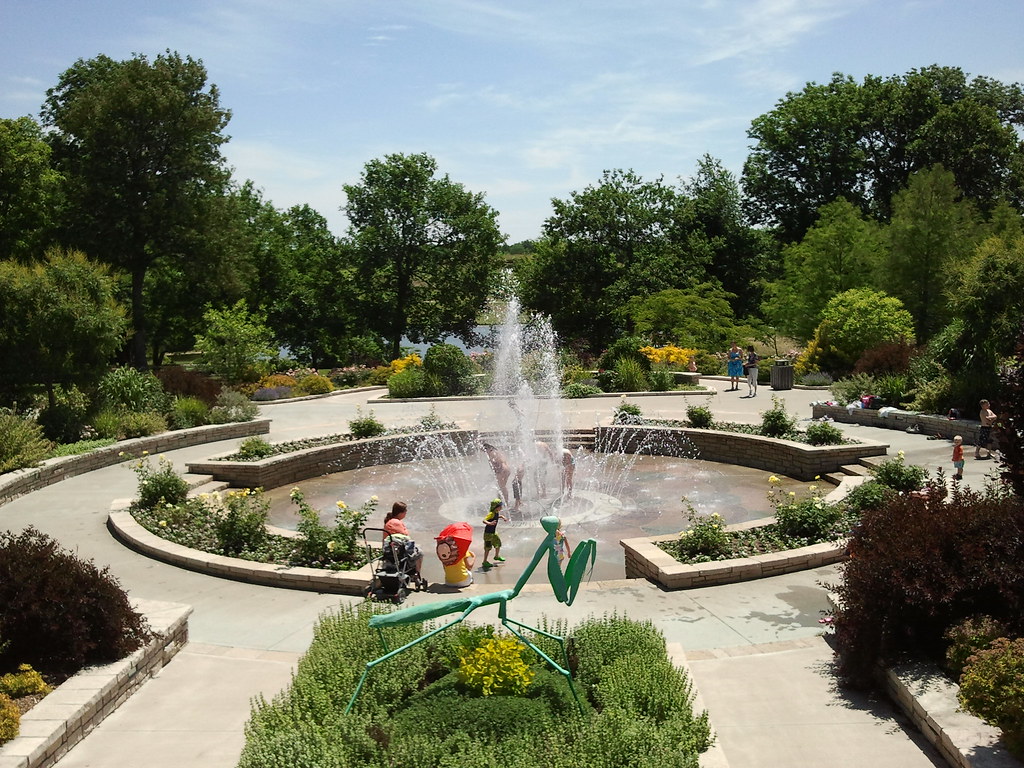
So come and savor the new summer season at Powell Gardens.  Even the Fountain Garden is already a favorite stop by our young visitors as a place to cool off and get wet after an adventure to experience all the Fairy Houses and Forts.

Friday, July 15, 2011

Midsummer's Luxurious Lushness


Peering from under the Scarlet Curls Willow in the Perennial Garden across to the Bold Border one certainly gets a sense that the gardens are at midsummer's peak of lushness! The flaming red daylilies are 'Lusty Leland', the bold grasses you will see below...


The Bold Border has spectacular tall Variegated Reeds (Arundo donax 'Variegata' with the yellowish variegation and 'Shanghai' with the real white variegation above). This is the "true" reed whose stem is sliced to make reeds for wind instruments like the clarinet. The bold bluish foliage is from the Giant Black-eyed-Susan (Rudbeckia maxima).

The Wisterias over the Perennial Garden's lakeside arbor are also lush with lovely cool blue encore flowers to enrich the scene -- depicted is mainly the Wisteria sinensis cultivar 'Texas Purple' which is a reliable rebloomer.


Lord Baltimore Hardy Hibiscus or Rose Mallow (Hibiscus hybrid) is again lord over all our red-flowering cultivars in the Perennial Garden. This plant is now 20 years old and finally shows it will need dividing next spring. Never divide a hardy hibiscus in the fall as they grow best (and re-establish) in hot weather. Yes these big perennials are hybrids of American native rose mallows and are closely related to tropical hibiscus (Hibiscus rosa-sinensis) and hardy Rose-of-Sharon (Hibiscus syriacus).


Disco Belle White Hardy Hibiscus remains our best white in the Perennial Garden with abundant bloom on a compact plant. The red "eye" to each flower adds a nice contrast too.


Pink Clouds Hardy Hibiscus is again the best pink-flowering Hibiscus in the Perennial Garden with full form and abundant real pink flowers. This one was hybridized in Nebraska and is extremely hardy.


The Island Garden's pools are starting to really bloom with waterlilies in an array of colors from white to yellow, peach, vibrant fuchsia, pinks, blue and near violet.


The Water Cannas ('Erebus' in salmon and 'Ra' in yellow) are at peak of bloom in the Island Garden pools and have more bluish-green leaves than typical cannas.


The Yellow or Gray-headed Coneflower (Ratibida pinnata) is a native prairie wildflower that is blooming vibrant golden yellow now in our prairie plantings and remnants around the gardens.


Some of our trees have put on lots of new growth this year: this is a new and rare Winged-Hackberry tree (Pteroceltis tartarinowii) growing by the old Visitor Center. This new plant has had a slow go at establishing but is unique from China/Mongolia and related to our elms and hackberries.


The Rose-of-Sharons (Hibiscus syriacus) are in peak bloom and this one is the Plant of Merit 'Diana' with pure white blooms that stay open at night. Diana is Goddess of the Moon so this is a perfect name for this plant which deserves to be in every moon, evening or white garden. Celebrate it tonight as it is the full moon! One garden friendly feature of Diana Rose-of-Sharon is that is one of only a few seedless varieties so doesn't self-sow all around the garden.


Plan your visit now to see the midsummer lushness of Powell Gardens. Despite the predicted heat the gardens will be irrigated and hopefully flourish through the heat wave. The Perennial Garden certainly is at its peak now and is celebrating its 20th birthday.


Wednesday, June 8, 2011

Red Hot in June

Along with the "Jurassic Garden" dinosaurs, several stunning "red hot" flowers grab the attention of Powell Gardens' visitors this week...


Indian Pink (Spigelia marilandica) is a Grow Native! (http://www.grownative.org/) Missouri native wildflower that always grabs attention in the Perennial Garden while in bloom. The flowers are hummingbird magnets while its name refers to the pink roots that the Native Americans utilized medicinally.


Autumn Sunset (TM) Encore Azalea sports its fiery post-spring encore of bloom already. We have the 10 hardy cultivars of Encore Azaleas on trial and display flanking the Hypsibema (Missouri's state dinosaur). The location is between the Rock & Waterfall and Perennial Garden beneath the lacey baldcypress trees. Visit http://www.encoreazalea.com/ to learn more about these repeat flowering azaleas and the 10 cultivars that have proven zone 6 hardy. You can come see them in person at the gardens!


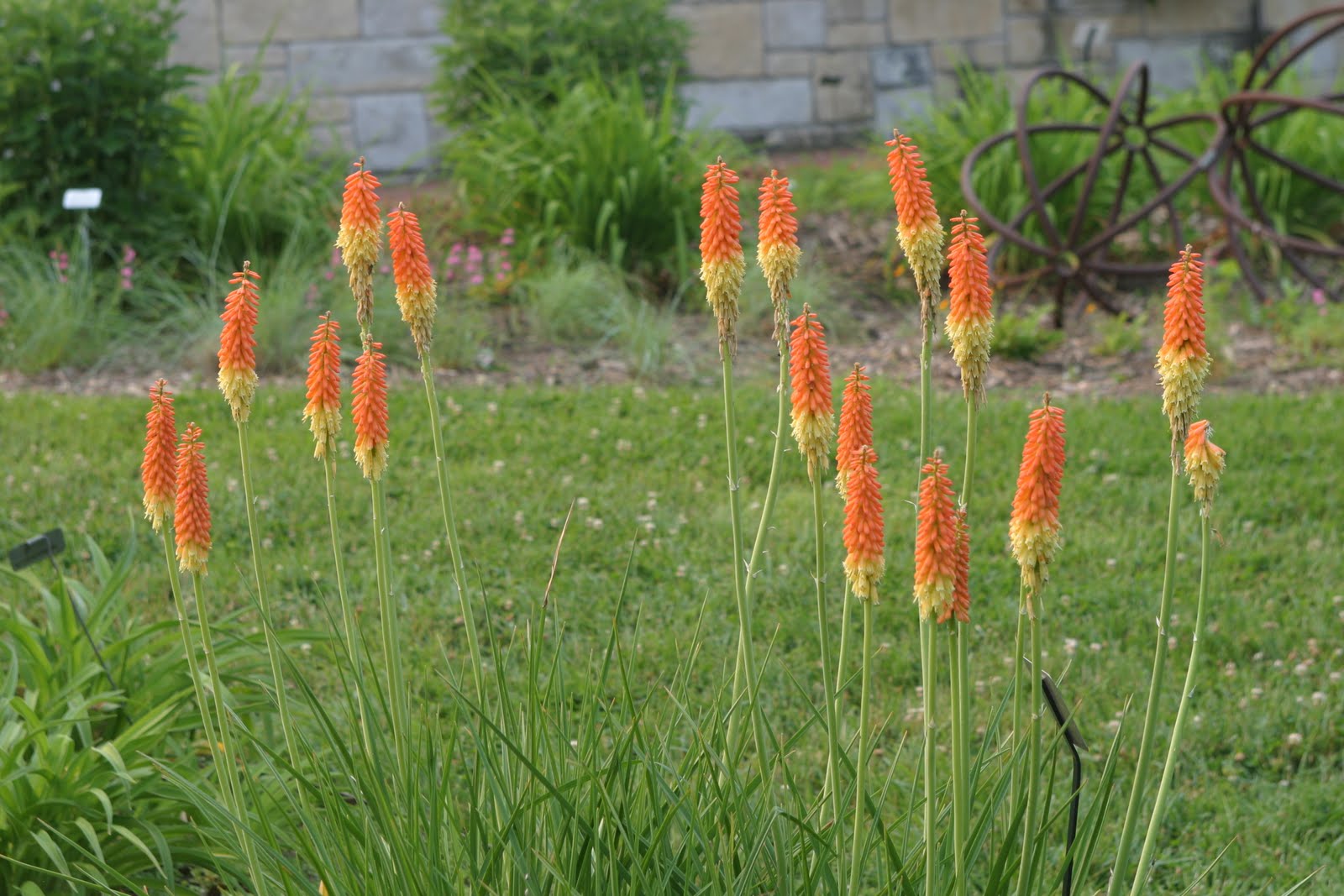
Red Hot Pokers (Kniphofia 'Alcazar') blaze like orange torches in the Perennial Garden's New Millennium border. Both hummingbirds and orioles like to nectar from these flowers though in their native South Africa they are pollinated by sunbirds. Yes, one of only a few hardy plants from Africa we display at Powell Gardens.


The vibrant rose-red flowers of Ghost Weigela (TM) (Weigela florida 'Carlton') show brightly near the Visitor Center trolley stop. This shrub starts out green, then produces these bright flowers and as you can see the new foliage after flowering becomes ghostly, iridescent buttercream -- becoming even more pronounced as the summer progresses.


This beautiful clump of Blush Knockout Roses set in the tapestry of shrubs besides the Fountain Garden has a red hot "sport" of it's original origin: regular Knockout Rose! Other shrubs in this garden tapestry are Magic Carpet Spirea in front of the rose, Concorde Barberries with Concord grape-colored foliage in the back, a shaggy Sungold Chamaecyparis left and feathery Vintage Gold Chamaecyparis right. Budding lavender at the bottom of the image completes the tapestry of foliage textures and colors that make this planting design showy in all seasons.


The red, fuzzy berries of native Fragrant Sumac (Rhus aromatica) have also colored up and create a perfect compliment to the shrub's green foliage. This shrub is native along the Nature Trail but planted around the grounds as well; only the female shrubs produce these berries which make a sassy tea rich in vitamin C.


The dinosaurs are "red hot" popular and I had to include this picture of the Allosaurus and her babies because they almost startled me in the morning light. Consider purchasing a ticket to Dinos in the Dark: Meet a Paleontologist on Friday evening June 17th -- call extension 209 to reserve your after hours visit when the life-like dinosaurs almost come to life.


The turkey sized Citipati also came alive in this morning's light. Don't forget to take a close look at the smaller dinosaurs and their relatives located throughout the Rock & Waterfall Garden.


The current hot weather is supposed to moderate this weekend; but still consider a refreshing taste of the many berries at the Heartland Harvest Tasting Stations, a cool splash in the Fountain Garden and the misty breeze of a walk past the Island Garden's water features. The first waterlilies are beginning to bloom their as well. These, plus the red hot flowers and dinosaurs on display are certainly worth the trip!


Friday, July 9, 2010

Dragonflies & other Flying Flowers

Big Bugs sculptures by Dave Rogers are a hit at Powell Gardens and each weekend through the summer we are celebrating the insects that inspired Dave's masterpieces. Saturday (July 10) is Dragonfly Day at Powell Gardens so plan on learning more about this top predator and beneficial garden insect during your visit.

Halloween Penant (photo by Linda K Williams) is one of many species of wild dragonflies at Powell Gardens and Saturday Betsy Betros (who is working on a dragonfly book for our region) will give a beautiful presentation at 10 a.m. on this marvelous creature. After the program we will head outside on to the grounds and let anyone use our nets to catch dragonflies for identification, see them up close and then release.

Widow Skimmer (photo by Linda K Williams) is another common garden dragonfly right now I will guarantee we will see. Betsy, Linda Williams and myself will be on hand for the catch and release to identify the dragonflies. At 1 p.m. we will take a hike on the short loop of the nature trail (about a one mile hike) to see even more dragonflies -- we recommend bringing a camera and binoculars for this dragonfly encounter.

Here is a closeup shot of a male Eastern Pondhawk (photo by Linda K Williams). Male pondhawks are blue while females are green! You will be amazed at the diversity and colors of our local wild dragonflies on Saturday.


The beautiful turquoise eyes of the Blue Dasher (photo by Linda K Williams) hi-light this aptly named dragonfly. A check of my notes from this time in past years reveals we should see quite an array of wild dragonflies now, including the above plus: Slaty Skimmer, Spangled Skimmer, Blue-faced Meadowhawk, Eastern Amberwing, Black Saddlebags, and Common Whitetail. The names are half the fun!

In one month we begin our Festival of Butterflies so mark your calendar. We just installed our native Butterfly Breezeway in front of the Visitor Center to raise local butterflies. Already this native Checkered White entered on his own (this is not the common Cabbage White). If you have any caterpillars you wish to donate and put in our native outdoor display, give us a call.

The first brood of hummingbirds have fledged and are visiting the Hummingbird Garden outside Cafe Thyme in good numbers. Two of the best hummingbird flowers are vines: depicted is the Blanche Sandman Trumpet Honeysuckle (Lonicera sempervirens). Trumpet Honeysuckle is NOT fragrant but is a hummingbird favorite. It is readily apparent this flower is designed to be pollinated by hummingbirds and they spot their flowers by sight (not smell). Trumpet Honeysuckle is native in Arkansas and south but has naturalized into Missouri. This cultivar plus the cultivars 'Major Wheeler' and yellow 'John Clayton' are your best varieties to plant because they rebloom well through the entire year -- yes we've even had flowers in December! Trumpet Honeysuckle is NOT invasive and doesn't spread by suckers like the next vine (see below).
Trumpet Vine (Campsis radicans) is a Missouri native vine with flowers designed to be pollinated by hummingbirds. This is the cultivar 'Red Sunset' which has flowers more red than typical orange-flowered wild types. Trumpet Vine is in our hummingbird garden and hangs over the wall just outside the cafe to the delight of visitors watching the hummingbirds. This vine has some bad habits of spreading by underground rhizomes "suckers" so can be a nuisance in some gardens or near home foundations. I recommend planting it where you mow around it or in a natural setting where you won't mind the suckers.

The Hardy Mimosa (Albizzia julibrissin var. rosea) trees are still in full flower and abuzz with hummingbirds as well as many butterflies and bees.

The purple-leaved cultivar of Mimosa called 'Summer Chocolate' is all the gardening rage right now and is stunningly beautiful in foliage. It is from a Japanese strain of mimosa so is less hardy than the heirloom trees which are from colder Korea. Last winter killed one of our Summer Chocolate mimosas while this one not that far away but a bit more established survived (though it has some stem damage). I recommend planting Summer Chocolate mimosa only for sheltered sites in our region. Look for our small tree towards the lake from the Fountain Garden.

Bluebird Rose-of-Sharon (Hibiscus syriacus) is a fine summer blooming large shrub that also attracts hummingbirds. This one is outside the Heartland Harvest Greenhouse where its flowers match the blue and yellow color scheme of that part of the garden. YES, rose-of-sharon flowers are edible! This cultivar does self sow into beds but not beyond. We have just added a new blue-flowering cultivar 'Azurri Satin' which is supposed to be seedless.
We have a "first" for the garden that our 10 year old Chinese Wingnut (Pterocarya stenoptera) trees flowered and fruited this year. I first saw wingnut trees in Sacramento, California where I admired them dripping with these unique strands of winged nutlets. Our trees are from a special hardy strain from the North Central Experiment Station in Ames, Iowa and have been hardy except for being damaged severely by the surprise 2007 Easter freeze (they more than fully recovered).
Here's a branch of our Chinese Wingnuts showing the pendant fruit. These trees are towards the lake from the Fountain Garden and are magnificent, drought resistant and very lush. The next step of our purpose as a Botanical Garden is to carefully watch that each of the nutlets off these trees do not germinate and create the next weed tree!
We are working with the USDA on evaluating potential weed trees before they become problems like Amur honeysuckle and European & Dahurian buckthorns. Because of 3 seasons of copious rainfall Asian Kousa dogwoods (Cornus kousa) have produced abundant seedlings in mulched beds below the Visitor Center. Plants that self-sow into garden beds but NOT beyond in wild areas are not a problem but we will carefully monitor this.

The lush season has created another first; the Lemonade Magnolia (Magnolia hybrid) has some summertime blooms! This magnolia has lemony flowers in spring and its summer flowers are more starry and white but add a bit of beauty none-the-less. Look for this Magnolia below the Fountain Garden as well.
Visit Powell Gardens on Saturday to learn more about dragonflies (they eat more mosquitoes than you could imagine). Watch for hummingbirds while you have lunch on the terrace outside Cafe Thyme (or from the comfort of air conditioning indoors). Enjoy the exuberance of summer flowers throughout the gardens and taste midsummer produce in the Heartland Harvest Garden -- rose-of-sharon flowers should be at the tasting station along with some plums, peaches and other goodies.


Friday, June 25, 2010

Midsummer's Bloom: from Lotus to Trees & Shrubs


The most magnificent flower currently in bloom in the gardens is the Mrs. Perry Slocum Lotus (Nelumbo nucifera). This water garden plant can be seen on the Island Garden though a few more weeks must pass for the Island Garden lotuses and waterlilies to be at peak season.
Magnolia trees are in the same ancient Order of plants as the lotuses and waterlilies and the Southern Magnolias continue with their sporadic bloom: abuzz with bees and visitors alike. This is the Twenty-four Below Magnolia (Magnolia grandiflora) on the south side of the Visitor Center -- its flowers don't stand out in the photo.

A closeup of a Southern Magnolia flower reveals its relation to the lotus. It has a marvelous lemony perfume: we have picked one for the front desk for all to smell as they are mainly up in the tree -- out of reach to visitors.
The Royal Crown Magnolia is our only Asian hybrid magnolia with a marvelous midsummer bloom that beats its early spring show. Look for the Royal Crown Magnolia at the Visitor Center trolley stop.
Golden Rain Trees (Koelreuteria paniculata) are also in full bloom around the gardens. Their warm, cheery flowers seem most appropriate in this sun drenched season. Many of our trees have suffered this year from being too wet for the third season in a row. This is a tree that demands good drainage. Golden Rain Trees can be invasive in certain areas with glade-like natural areas but has never escaped in the wet clay soils of Powell Gardens.

Hardy Mimosa trees (Albizzia julibrissin var. rosea) are also in full bloom at the gardens -- these outside the Conifer Garden outside the north end of the Visitor Center. See my blog from last year on this "you either love them or hate them" tree. This tree is native to cold Korea and is hardier and more refined than the typical species found wild from Iran to Japan.
The Hardy Mimosa trees around the Rock & Waterfall Trolley stop we have named 'Kansas City Red.' This selection is from a tree in Brookside that weathered the severe winters of the 1980's but besides its proven hardiness, its first flush of flowers are brilliant hot pink-red! The later flush of flowers is more typical of the others and a rich pink. This variety comes true to type from seed and is more vigorous than others. The original tree is now gone so I'm glad we saved this unique plant.

Buttonbush (Cephalanthus occidentalis) with its marvelous spherical flowers is coming into bloom on the Island Garden. This huge, native shrub can easily be trimmed up into a small tree like we have done on the Island Garden. Its flowers are rich in nectar and visited by many beneficial and pollinating insects.

The large white pom-poms of flower make the Annabelle Hydrangea (Hydrangea arborescens) one the largest flowering of all shrubs. This is actually a selection of Missouri native Wild Hydrangea and was discovered in a garden in Anna, Illinois. Many of our best ornamental shrubs were never specifically hybridized -- just chance seedlings that were discovered by a plantsman with a good eye for promising and unusual garden plants.

The huge flowered and aptly named Bottlebrush Buckeye (Aesculus parviflora) is also a superior midsummer blooming shrub. Bottlebrush Buckeye does become a massive shrub over time -- easily 15 feet or more at maturity with twice the spread! It can be controlled by removing wayward stems and cut back on occasion if so desired. This shrub is almost exclusively native to Alabama, barely venturing into adjacent states in the wild but popular intemperate gardens world-wide!

The showy red color in this shrub is not flowers but fruit. The Shasta Doublefile Viburnums (Viburnum plicatum var. tomentosum) on the Island Garden are loaded with bright red berries this year. Often grown solely for its lacecap flowers that march down either side of its twigs (double file!), the fruit (which ripen black) are actually showy for a much longer period of time than the flowers.
The Tapestry Hedge in the Perennial Garden just got a haircut to keep it a maximum height of 8 feet. You can see that the Perennial Garden is awash in floral color as Booms and Blooms looms for a daylily extravaganza next week.
Enjoy the midsummer colors of Powell Garden, there were simply too many in bloom so I focused on the trees and shrubs. Daylilies, Lilies, Coneflowers, Beebalms and Milkweeds are other flowers commanding attention among the Big Bugs in the garden. Blueberries are still at peak in the Heartland Harvest Garden so be sure and taste their fresh picked taste there as well.